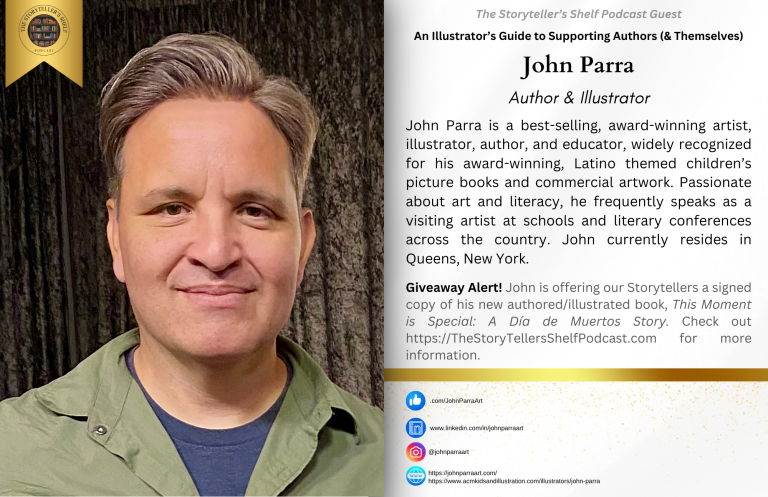
0:15 Hi storytellers. Welcome back to the Storyteller Shelf podcast and thanks so much for joining us together at the end of May. I'm Jackie here with Teresa and we are still focused on how to have healthy hands. We're trying to discover how publishing professionals, agents, illustrators, the whole community come together to support each other on the road to success. We have another extra special guest here with us today, John. And John's going to tell us a little bit more about work from an illustrator's point of view. So, let's just dive right into it. John, tell us a little bit more about yourself. My name is John Pada and I'm an artist, illustrator, author, educator and I've
1:00 been doing chills books for the past 204 what is that 20 years now and um but a professional illustrator for more than about 28 years and um I'm just happy to be here but it's been a wonderful journey few uh twists and turns but uh I'm so grateful to get to share my story my background and maybe even some of my art and um books with you. Thank you. What inspired you to get into picture books in particular? Um, well, initially I wasn't I wasn't uh planning on doing picture books. It kind of happened sort of um randomly and uh early in my career. Uh I think this was around 2004 and um I was doing commercial illustration work for different companies and things like that or
1:45 magazines and whatnot. Um, when I was uh offered to do a picture book as they saw my work, they it was colorful. It had family oriented themes in it. Uh I guess it appealed to maybe a children's book um audience. So it was a small publisher Luna Press. The author was Monica Brown and it was one of her early early written books. I I one of her first books actually she wrote but second book published. It was called My Name is Gabriella. And so when I read this the story I it was a biography. I said oh a children's book could be like I didn't have a lot of about or remember what a children's book could be about which I thought was interesting. So here it was
2:26 this this picture book biography. I thought oh this is this is interesting. I I like this speaking as an adult but I didn't know how to make a book. So, it took me about about halfway through the project before I sort of understood how the themes were going to be laid out, the the sort of the flow of the book. There's a sort of rhythm to it as well, and you it's almost like you're you're jogging at first and and and running and then you kind of catch up to a speed that you kind of uh you understand. So, this is what happened. And it was one of the hardest projects I ever had to work on before this. sudden, you know, illustration projects where you do a
3:01 poster or you do a magazine thing. It's one, two, three spreads and you're done. This is the whole book. It's, you know, 16 pages or 16 pieces of art. You know, depending on how uh long the book is, plus the cover, plus the back cover, plus end pages, all sorts of things involved with this. So, it took me a really long time. I was exhausted, but at the same time, it was exhilarating. It was really just amazing to see. Um, so once that book was done, I turned it in and they were super happy and it it did did good and uh that book then would led to another book which then led to another book and etc etc etc. But for the first three books that I did, I kind
3:42 of just felt I was turning in illustration assignments in the in the sense that I didn't realize what a strong community of librarians, teachers, book lovers kind of surrounded this industry. And to be a part of that was unexpected and so welcoming. I mean, it's so thrilling to be a part of. And the moment I realized it is when this is funny. So after the third book came out, um I had won two kind of major awards, one from ALA and one from SCDWI. And so when the ALA award came in, it was put up put up prey honor award. And so the publisher asked us, well, would you like to go to the awards? I said, yeah, that sounds fine. You know, I knowing not
4:25 knowing the context of any of this information. So, my wife and I, we go down to Washington DC and um we're walking to the event and I see just hundreds and hundreds of people just walking towards the convention center, not knowing that it was like and I'm thinking, well, look at all these people. Where are they all going? You know, like what? This is amazing. You know, what kind of event is going on right now? And then my wife is like, you idiot. It's like they're going where we're going, you know? It's like uh this is it. This is this is the thing. And then it it really sort of like like hit me. Oh, this is much bigger than I thought. And you know again from then on
4:59 I've just been working on more books and um from the different stories you from biography from fiction to non-fiction and um just having a blast the whole the whole way. It's been a lot of work. It's been a lot of fun but so rich and rewarding especially again through meeting the community of um of librarians and book lovers and and teacher and things like this. That's amazing. I love how you started from something that wasn't related exactly to doing illustration for books, but then you moved on and then just that aha moment like I made it. To me, that is amazing. I think that's inspiring. And that's actually something that I wanted to ask you about. I really admire your
5:42 style. My husband's family comes from Mexico and so you see a lot of that style in Mexico and and a Latin American culture. So that actually brings me to a question. How did you develop your signature style and what advice do you give illustrators who are searching for an artist's voice? Well, this this actually it's a very specific moment in fact uh when this happened. So, what it was was I was in art school. I went to art center in Pasadena, California. And they talked about that a lot, you know, finding your style, getting that style down and, you know, kind of having that signature look that represents who you are. And I kind of struggled, you know,
6:19 I was taking different classes, learning different techniques, which I definitely advise. You know, I always tell young art students, learn as much as you can, learn all the tools in the toolbox in a in a sense. Um, but there'll come a moment. There'll come a moment where you have to decide, you know, this is you're you become really good at doing these things, becoming a good artist, a good renderer, whatever. But there comes a moment where you decide what kind of art do you like to do? what kind of and that sort of question I kept asking myself what kind of art do I like to do and what what is important to me and there was a conversation that I had with a
6:55 visiting artist he's a mural artist from or by an artist from uh East Los Angeles named Salmon Bertha and he gave a presentation at art center and I was just blown away because he used a lot of his his his background his family um cultural background and stories to uh show in his artwork and talk about and explain and and sort of celebrate. And to me, this was um this was gamechanging, you know, like, well, you know, this is this is something really really interesting. And having this conversation with them afterwards, I I decided, you know, I'm going to look at my background and my culture, which is Mexican American, and take some of those
7:40 those see what I can come up with. So, the first p painting I did was a painting sort of a Day of the Dead Deuos painting that I still have it. It's it's hanging right above my uh my computer right here as a reminder of where it all started. And I had so much and it was done in a very folk art type of way. And I built I built like a frame for it like a wooden like crossing and then the skeletons are in the side. I had so much fun doing it. I I just like this is it. This is I love this. This is it. But it also felt fulfilling. So when I talk to young artists, you know, when they say, "Well, I'm looking for a style." Um, style is also what's in here, what's in
8:18 your heart, what do you bring to it, what do you care about in life, what do you think about is important to you, put that in your art, and you'll see a difference right away in what you're making and what you're doing. So if you you kind of incorporate the style that you like mix with what is something that's heartfelt important to you and then put that in your art and then you'll see just amazing things happen. I appreciate that you mentioned it's not easy to find your voice and to learn all of these styles. I think that's probably wise words also for writers too. It's not easy to find yourself along the journey but just keep learning everything and who you are comes from
8:56 that. Um, but I'm a little curious after you've established, right, your art style, your particular voice, you know what you're doing by now, you know what you're good at, you know what you want to portray, have you had any influences change your art style as someone who's already established? I think has it changed my only in the sense that I just try to make it better and better and better. I be refining things. It's more about refining than just completely uh switching things up. At this point, I really just I still love doing my art since that first painting that I did all the way back in art that painting that specific painting I did back in art school, but I am
9:34 refining it. It's a lot better back then in a sense. And also conceptually, I think it's important to think about when I'm working on books, how can I improve different things? And of course, I am a huge fan. I'm a fan just like anybody else of other people's works of ch illustrators, authors, everybody else. So I see what other people are working on, how they incorporate ideas and their thoughts into books, but I only I I use that to enhance and enrich the work that I use to approach my work. And um so I'm again it's kind of hard to explain in a sense, but it's um just amazing. I like how you showed the inspiration where you were missing like where you get inspired
10:14 by other artists, whether they're writers or illustrators and that actually brings up another point where you're talking about collaboration, right? So picture books are a collaboration between words and the images. So how do you approach working with an author to bring that vision to life and making sure that their voice and your voice remain there? Well, once I start seeing usually when I I select a picture book to work on, they send me a manuscript. So if I'm reading the story and you know how when you read a book or read a story already you have a movie sort of of that story playing in your head. Well if those images are really really strong inside
10:59 my head then I know it's something that like this is good. I got to work on that. So that's already like a you know like woohoo this is exciting. But again I'm not trying to copy what's necessarily what's written. I'm not trying to just sort of duplicate what that is. I'm trying to complement. I think that's the word that I I like to use to complement the text and um even even sort of suggest or say things that are are sort of inferred maybe in the text but aren't written down or something that the text doesn't say something like you can find things that aren't being said and then illustrate them in a way that sort of enhances the text I guess too. So compliment
11:36 enhancing these are the sort of things that I'm thinking about when I'm working on a picture book text. And also there's a lot of research that goes involved with a lot of my books are when I read a story maybe it's a autobiography. So the again there'll be a lot of other influences going on outside of even just the written word. Sometimes I'll read if there's a biography about the person I'll read this their biography find out where they live. Find out what food is locally served in that area. find folk artists from that area and uh look at their art because the folk artists have a way of sort of connecting into the community in that area. All these sort
12:11 of things kind of like are sort of grouped together and to instruct me how to then start drawing and sketching the book out. And so when you're working on a picture book, you you will sketch all the characters first. Characters come first and then you build the environments around them. And then all the drawings are then once all the drawings are set up and you kind of see that it has a sort of a good pacing. It's almost like a storyboard for a movie you're almost looking at. And then so that piece so those sketches are sent to the publisher. The publisher approves them and then I start painting. So this is kind of like the whole process of the
12:46 of the making of the picture book. And when I go to school visits I always ask the uh the students it's like how long do you think it takes me to illustrate one picture book? And you know, and then they raise their hand. One hour, one week, one day, something like this. And um it's it's it's so funny. I'm like, well, a little bit longer than that. It actually takes me six to eight months, eight months to illustrate one picture book. And like, oh no. You know, it's like so it's like if I was starting the third grade, you know, by the time I'm finishing that school year, almost like one book. And so they get like really excited to know about that, but almost
13:20 like, oh my gosh, that sounds so so much. But then I reminded him I said but I have to again it's all because I just take one piece at a time. You don't do the whole thing at a time because you'll you'll get overwhelmed. You do one step at a time. You break it into little pieces and one goal. Today is this, you know, a little bit of this and then you do the next thing and then you do the next thing and then after time goes by pretty soon you know you've done a lot of progress. Anyway, it's a whole it's a it's a whole method to the madness sort of process. I would love to dig into this a little bit deeper. If you can imagine that you're talking to someone
13:55 who is trying to get into the publishing game, right? They haven't had any jobs yet, but they're chasing them. Back up a little bit. Tell us what happens. Do you really just get a manuscript in the email and you take it from there? Tell us about what kind of comes along in the package to you before you begin. Well, when I get a manuscript, it's usually from my agent. she usually sends it to me and then um or suggests it to me and then I'll read it and um and it comes from the publisher. It's funny because people always ask me what's it like to work with authors and I say, "Well, I I don't work with authors. I work with publishers." So, what happens is an
14:29 author will sell their story to a publisher. And then the publisher turns around and says, "Well, we're going to find the artist for you." And then they reach out and perhaps I'm the one of the people they reach out to and ask if I'd like to work on this manuscript. And then what happens is I'll end up working with the art director at a publishing house when I'm when I'm starting the process. So I'll stay in touch with him. In fact, they don't even want the author so much involved. I think maybe like at the sketches once the sketches are turned in, they'll be allowed to look at it to make sure there no mistakes or discrepancies that you know they might have inside
15:04 information about or something that I might have missed. and then they could say something but overall they're not really get to say too too much. So in fact I don't often meet the authors until after the book is published. In fact there was one author I hadn't I don't think I met until like 10 years after the book was published. It was uh because she lived in kind of towards the west coast and I was on the east coast and we just never were at the right conference at the right time or something. So it's it it was interesting. But I did we did meet eventually in Texas at San Antonio Book Festival. So that was fun. That's wonderful. But John, I would love to
15:39 know. Have you ever said no to a manuscript yourself that your agent gave to you? Well, I mean, yes, it it happens. You know, it happens. There's usually two reasons for it. Again, my schedule is is is quite busy and I just I can't do it, you know. So, even if it's an amazing amazing story and I but I look at my schedule, I say, "I wish I could take this project, but I can't." And sometimes they wait. Sometimes they'll be able to wait a little bit for me to finish something and then I can take the assignment. And then other times I just don't feel I'm the right voice for this story. Like they're great solid stories, but it's just maybe I feel like I don't know if I'm the right
16:18 person for this. And that's happened a couple times. And um so, but other than that, but it's that's rare. That's rare. It's usually on just too busy. I think that's fascinating that you actually don't meet the author and that that's something I think that a lot of people don't quite understand that you're the one that's working with the publishing house and that's I'm glad that you mentioned that. But also here's another question for you. Um it's kind of like we're pivoting. How do you handle feedback as an illustrator? Um I mean I'm used to it now. Um, when I first started out, maybe I'm a little, you know, sensitive. So, it's sort of like when people criticate things, you feel
16:54 like, oh, they're criticizing the work. But it's not true. I I don't look at that any, you know, anymore. What I feel is we are a team and we're all trying to come to this this develop this project to a point where it's the best that it can be. And people throw in ideas and people kind of exchange thoughts about this. And some of those thoughts I'd say I'd listen to them of course and I try to see do they make a valid point. And sure enough most of the time they they do or things that I haven't thought of. Like I can't think of everything. There aren't things that I miss all the time. And when somebody points it out I go oh yeah of course why didn't I think of
17:32 that? You know so usually I end up agree agreeing with a lot of the suggestion. However, there are times where I specifically can remember things that I've fought for, you know, like to keep into the book. I said, "Listen, this is important." And then I'll try to back it up with either research or or papers or thoughts. And I submit emails and and and all sorts of things, try to to persuade it. So, don't feel like if you want to if there's a hill you need to die on, you know, fight for it, you know, but but back it up with thoughtful responses and information. the reason why you feel it's important to be in the book. Um, you know, that it helps
18:12 contribute to the story and why it's important and and then what happens is uh uh sometimes they'll often times they'll say, "Oh, okay. Now I see it. I get it. Yeah, that sounds good." And then and then a couple times they go, "No, that's but that's okay. At least you know you're you you you fight, you know, you fight to live another day or live to fight another day." It's it's all there and um it's a fun process. It's all because everybody cares about the project and we all want it to be the best. So that's that's why it kind of gets passionate. So I'm kind of used to it though by now. Are you at liberty to give us a specific example of something
18:50 that you fought for? Gosh, I I'm trying to think of one that I I would I'm trying to remember one that I succeeded in because the last one I didn't succeed in and uh or it was a compromise. Well, I'll I'll say this one. Okay. The book I was working on was called Spanish is a language of my family. And there was a scene where the girl is um she berated a grandmother's telling the little boy how in school that kids were just made fun of, disciplined, sort of berated, punished for speaking Spanish in school. And so the scene is this the scene where there's a little girl and she's sort of alone and kind of very upset and sort of hiding and um and it was at sort of a
19:30 you see a sink in the background and we weren't sure which character to use because it was talking about the aunt but I was a little worried that well we're introducing a new character. Are you sure you want to go to a new character? Shouldn't we show them the grandmother character as a child? So there was a little bit of back and forth between what we felt who that actual person should be. But we ended up going with what they felt was with the character, but they did compromise cuz they they kind of wanted to show, you know, when you lock yourself in the bathroom, you're very sad. So it's different than being in a bedroom, you know, like showing a bed and like a a
20:03 window or something like that. Like, you know, when you're really upset, you lock yourself in the bathroom. I guess that's what I was thinking. Anyway, so there was a compromise, I guess. That's wonderful because just some insight in another episode, Teresa and I are have the honor of talking to two attorneys and we were speaking about how important it is to advocate for yourself in this business even though we're all working on the same thing because everyone's voice at the end of the day really jumps in to make a beautiful product. And some people get intimidated really easily. So, we want to make sure that newbies starting out, especially have that
20:37 motivation to speak up if they feel really strongly about something. Even if the answer is no, no is normal. No happens to all of us. But we want you to say something. Yeah. And uh it don't feel like just because you're new at it that you don't have a right to say it at all because again, it's it's it's important to to speak it and uh to speak up and say those things. For sure. All right. I will steer us out of murky waters now. So, back to a more normal question. That's okay. This is going to go hopefully into some Illustrator lingo that you know, but we don't. But what kind of tools do you use when you're illustrating? Oh, the tools that I use, well, I use uh mostly paint.
21:18 So, I'm kind of a traditionalist now uh because a lot of people use the computer and I do use the Photoshop uh to do a lot of clean up with the work, but mostly it's I painted acrylic paint on illustration board. And so, what happens is I'll cut the illustration board to size and gesso it and things like that. And then what happens is I'll layer up I'll add layers of just flat colors like one layer let it dry of like white one layer of orange one layer blue one layer of and then I'll sandpaper into it because I don't like working on white. I don't want to work on like a white background. I want to work on some some sort of textured colored background. And
21:55 so people think I work on wood but I don't. It's actually just layers of paint that I and then sandpaper inches cuz I want to look like when you find my art, when you look at my art, I want it to look like you founded your grandmother's attic, you know, well's attic, you know, kind of like that kind of old shabby chicy, you know, sandpapered in weathered look to it. And um so I love that there are actual paintings and um and then the other thing is is like you get to enjoy them. You get to hang them up and frame them in your your studio, your house. Um, I have exhibits, you know, up the country. I've been in museum exhibitions, you know, showing my art. Um, I had a
22:33 wonderful show last year, um, at the, um, Fresno Museum of Art, art museum of my book, Growing an Artist. So, all the original artwork from that book was it at that museum. And, um, it was a very, oh, how do I say this? It was kind of a powerful moment. Uh, because I got to see fair. We I grew up in California and my father grew up um was born in Texas, but they came to California and they were migrant farm workers. So Fresno is located in the central valley of California, you know, right in the middle of all the farmland and things like this. So just making those connections and thoughts like here I am just one generation after my father who was farm worker in this valley and now
23:16 at the museum of art in Fresno. And um and the story has to do with our story. My dad and I work together as kids. So it's a very personal moving kind of moment just being part of it. So again it's uh art art that's what's so great about art. Art is um you know original art connects people. It touches people. And for me also art is a way to communicate. When I was young verbally I was you know I was okay. I was good but I was very shy, very introverted. But through art that's where I I I sh I really shine and was able to kind of express myself and I think kids express themselves in different ways also when I think about you know some kids want to
23:58 express themselves through pictures through visuals some are good at speaking some are good at music some are good at theater dance things all these sort of things and um when you're on your sort of educational journey in life I think it's good to kind of like use all the tools that you feel comfortable with you and then learn others as you go along. For me, art was always always the primary my primary form of communication, expression, just how I felt and what I loved to this day. When you mention kids, they learn and express themselves in different ways. Like I'm a mom and so my kids, they each have their own way of expressing themselves. If you know if you love to
24:39 play music, do art, you know, write stories, do anything creative, you know, whether you're a young or an adult. I think it's just a healthy thing. It doesn't have to be about, you know, necessarily even be a professional at it. Just make it a part of your life and you will feel better. You will think differently and it'll just enhance what you do and who you are. Um, that actually brings me to another question. This goes back to the advocating for yourself. So, how do you navigate contracts, royalties, negotiations? And what should illustrators know about the business side of working in publishing? Well, I right now I have an agent who sends me looks over contracts. Wonderful
25:16 Adrian, Adriana Denezas, Adidas Creative. So, we together, we go over contracts and she's always fighting for all the details in the contracts. But at when you're starting off, sometimes you don't have an agent and that's fine. In fact, I know children's book illustrators that don't have agents, even though they're professional illustrators for many, many, many years, but for me, I I like it. I I don't mind. I've done I've done the years where I've looked at contracts and things like that. They're usually pretty standard. Most publishers have a standard royalty rate. What happens is you'll get an advance when you start a picture book. The publisher will give you an advance
25:51 against royalties. And so depending on how much they give you once the books is on sale and starts selling that advance has to be made up towards your the royalties they already gave you. Once those royalties are already made then you'll start collecting royalties after that which is a great feeling at once you hit that moment because it's like um it's like you oh this is good. It's like free money but it's it's great. Now I always tell people that you probably won't be a millionaire like if you just do one book you know I always say if you do if you do 10 books you do 20 books you think of all the royalties coming in if you did 20 books and they all earned
26:26 out that's a good living you know because a lot of times is how am I going to make a living at this you know because that's sort of the business side of things. Uh this is sort of the everyday nuts and bolts side of things. There's the creative side of being an artist and then there's the the real world business daily side to it. You have bills to pay. You have, you know, rent, mortgage, things like this. And that's something I think people should discuss. I think people should talk about that how much people make and what they earn and is important, you know, to kind of demystify because it's such an uncertain time to be an artist and and how to be a part of that. So, if anybody
27:03 ever asks me directly, you know, I'll tell them. I'll just say this is what worked for me. This is how much I make. This is da da da da. But but the contracts most publishers have pretty standard contracts. I also hold on to a lot of the there are certain rights that I have where I can take the images and use it for merchandising. That's a part of the contract now. We also discussed bilingual books now more than ever. Like every book that comes out, we'd like to see one version of Spanish, one in in English. These are not things that we talk about in the contract. So there there's certain aspects about that that are not financially related but you know
27:40 more about how we want to connect with the community more and I feel that's that's an important one for me and I'm glad we're we're doing that more and more. I'm trying to think if there's other other things. Well obviously organizations like SDBWI really help when you're starting out in children's books. you know, they provide a lot of good information or, you know, young authors and illustrators and creatives, you know, especially if you're you definitely want to do a show as well. I get to be friends and colleagues with some of the best writers and illustrators in the country now be and a lot of it because, you know, to do these events, STBWI, ALA, and other book
28:19 festival events. Again, I'm I'm a fan. I'm a fan just like anybody else. and to to have that kind of supported community because illustrating is kind of a lonely path. You have to like being by yourself and be a self-starter and working hard every single day. And so to have a kind of community behind it is is um it's helpful. You can ask questions. They tell you things. So I said don't be shy, you know, go to these events. Go and put yourself out there. Again, I was a very very strong introvert as a kid and the thought of actually going up and introducing myself, let alone speaking in front of people, terrified me. I remember I was in a I remember I was at
28:59 junior college and I was uh I had to take a speech class and I was thinking, God, I just wish this class is over so much. I'm so glad I'm so glad it's like once this class is over because I was thinking, I'm so glad that I'm interested in art because I'll never have to speak in front of anybody because I'm interested art. I'll get to work by myself. Not realizing, oh, the joke's on me. You know that. Uh, but you really, you also get used to it is the other thing. It's like you put yourself out there, it gets easier and easier to do. And um, don't be afraid. I think the the kids lick community is one of the nicest, coolest, best people in the entire world. What you're saying really
29:35 resonated with me because I was such a quiet kid. I really did not speak. And even throughout college, I really dreaded networking. I was the kid that dreaded asking for letters of recommendation from people I had good relationships with. So, I completely understand wanting to be out of the speech class. But that being said, this industry, you're right, it pushes you, but it's full of a lot of positive risks. And I think at the end of the day, there are more genuine people in this community than there are not. And you always end up finding them. And I know you mentioned SCPWI, but do you have any advice for someone who's perhaps working on their portfolio to
30:14 get an agent for the first time? Yeah, one of the things I've done some portfolio reviews, one of the things I noticed is sometimes I'll see an artist and again they don't know they have a style or they have multiple styles that they have in the portfolio that they're showing and I don't really know a what style they they like to do, what style they want to do. It's sort of um it's almost like inconsistent. It's good. All the all the work is quality. It's very good. So, I usually suggest kind of have it being thematically packaged together. Like if this was a book and you were looking at it, all the art should sort of look like it was by the one style,
30:52 one artist like put it together. But if you have renderings and abstraction and then this, it's again equally fine. But I would say definitely package it as one style. That's the first thing. Second thing is it has to be art that would fit in with the Jones book community. Does that mean fairy princesses and castles necessarily? No. But I'll just say it's it has to fit in uh visually in a in a way where it would connect each other's books. And there's a certain I don't say aesthetic, but it's a connection or theme or trying to think of the right word for it that when you see it, you know it and you and you look at it. And by the way, I never I
31:34 wasn't the best artist in my art school. So never feel also like I'm not good enough. Do don't do the I I'm not good enough speech. You're not in a competition with other artists. You're in a competition. Well, you're not even in a competition, but you're if you are in a competition, it's with yourself to only be the best person, best artist that you could be. So don't feel like, oh, I'm not as good as so and so. I'm not as good as this person. This person is much better than me. That's not a good way to approach it. What you want to do is I have a voice. I have a I love doing this kind of art. Again, what kind of style I want to make, what looks best
32:07 to me. And then just improve on that. Improve on that. Improve on that and make it the best that you can be through your voice. And you'll find you'll find that path. You'll find that path. So once you find that voice once you find that path, other things you can do is take a a classic picture book. I've seen where people take classic picture book stories and illustrate it sort of and update it to that modern sensibility of their style. And I think uh people can take on some pretty interesting pieces of art that way. If you're if you're searching for like what kind of pictures should I make? Well, just take an old picture book like that and do something
32:40 like that and do an update. I think it's kind of a cool way of uh reinventing and also it'll it lets people identify, okay, this is a chill book. You know, the these are children book paintings, but it's it's it's modern kind of a cool thing. Those are just some suggestions. This episode of the Storyteller Show podcast is brought to you by Harian Suns fine tease. A perfect companion to every story. Whether you're reading, writing, or just enjoying a quiet moment to yourself, Harian Suns offers a beautiful selection of teas to elevate this experience. From classic blends to unique finds, every cup is crafted with care, just like the stories we love to
33:18 share. shoph har.comdisountstoteller and storyteller is in all cap. Now let's get back to the show. Actually this goes along with that when you're mentioning theme that goes along with branding. So being an illustrator you mentioned and and sometimes the same way for authors where we feel isolated. We're in an island of our own when we're especially busy writing and stuff and I I empathize with that. Obviously it's in a different aspect but this goes along with the brand. Would you have any advice for creating an online presence for illustrators? Absolutely. I think having an online presence whether website, Instagram, things like this, it shows
33:58 also it helps especially if you're looking for an agent if you're looking to get picked up because today's say people want to see that side of the business. You know, publishers want to see it, agents want to see it, things like this. It's important to them. And I've seen people get signed to agents based on the art was great and they have a big social presence. So that was two big things that they talked about why they got signed. So somebody that's too introverted, I totally get it. But then just you have to farm that out. You'll have to farm out those kind of um uh social media posts to somebody that you close to or hire to to do it for you.
34:38 But it's kind of needed. It is a business and you need to get your name out there and you need to get the work out there and you need to promote things. And what I always say is anytime I work on a project, whether it's a picture of a project or an illustration for a company or or institution, I'm celebrating with them in a sense. So I want to post about it. I want to talk about it. And when you do that, they see that they see that you're you care about them. You see that you show them you're respecting them. You care about them. and you're kind of almost like you're celebrating it together, which leads to repeat business and repeat clients. And
35:13 again, that's a part of the business side of things is a often the books that I work with are people that I've worked with before and they like working for me. And so when you work well with people, you enjoy their company and you enjoy kind of celebrating this and and and and sharing this these stories and these books once they're done. Again, it's a it's a team effort. And so I want to celebrate as a team and share those those things. So definitely promoting things is is a part of that and letting people know letting people know about these things uh is is super important. We know that your work has a lot of cultural representation in it. And you
35:52 spoke about researching and looking at other artists and different communities to make sure that you know what you're creating is still authentic right to the story that you're portraying. Do you have any other advice for people who are trying to portray a culture that is not their own in illustration? Yeah, I mean usually when people are working on other books again it it comes down to research. It definitely and that could be researched through other novels books non-fiction especially helps especially biographies if it's if the book is about a specific person. There was a there was a book that really saved me. I did a book called Power of Her Pen and it had
36:31 to do with the story was about Ethel Payne. So what it was is uh it saved my illustration because what happened was when I read her biography, there was a a scene where she goes to Japan after World War II and I just assumed she took a plane to Japan. And so I have a scene where she's getting on a plane and flying out there. But when I read the the biography, no, she took a ship. She took a a ship out of Seattle, I believe, to Japan. And so of course, you know, research like this is important. I mean, that wasn't a necessarily a cultural fix reference thing, but um definitely made it easier to to make sure that what I did was correct and which is what you
37:09 want to do. I want to make a book, especially if it's a non-fiction or biography book that if somebody knew this person, if somebody knew about or this place or this culture, that they would look at that book and it had nothing to do with me, but if they looked at the book, they go and they would feel, "Yes, this feels right. This looks right. This is correct. I knew this person and yes, this is the way it is. And so again, research, talk to people within that community. Talk to a bunch of people within that community. Show them what you're working on. Show them what they see about it. Get some feedback. Get a lot of feedback about it. Make sure you do it right. It's so
37:46 important. And when you when you show that you're there to respect that culture, when you're there with an open heart and respect it and you do your due diligence, chances are it's going to be fine. It's going to look great. It's gonna feel great and it's going to show it's gonna show on the work. And so that's what I I would say if you were working on something like that type of project. Yes, this is good advice. I think that also resonates for authors as well is to make sure you do your due diligence like if you're depending on what genre or subgenre that you're writing about as well. And that's something also authors we find and sometimes that can be an obstacle that
38:23 we face. And with that being said and obviously uh in the industry you face many obstacles. So is is there an obstacle maybe that you can think of at the top of your head that you faced and and had to overcome and maybe some lessons that you learned from it that helped you in your illustrations and in working in the industry obstacles. It was it was again it was hard getting started like um because I kind of wanted to do it my way. I was a very my way. I'm a very my way type of like person and artist. Blame it on tourists or whatever. But uh that's that's uh that's me. And at the time when I started throwing my portfolio around, not a lot of people were interested or even knew
39:10 what to make of my portfolio because it had a lot to do with, you know, Hispanic culture, my Mexican background, and things like this. And it just wasn't thought about a lot, I guess. Um you know, when I was showing my portfolio. society. It took a long time. Again, it took a while to get established. But I knew I knew that, you know, demographically things were changing and and that one day this is this is going to be in, you know, in the forefront. This is going to be important and I'm going to be in the right place at the right time. And so patience is your friend for sure. Patience, determination, persistence is um is the key to this. You really have to be in it
39:48 for the long haul. I always tell people, you know, um I'm not I'm not going to retire. This is my passion for my life. I'm going to make this a part of my life for the rest of my life. And when I made that decision to do that, and I remember where I was, I was actually in um um I had an artist come to my school. And um because at that point, and this was in junior college, no less, because I didn't know I was going to be an artist. I just kept taking art classes that I loved, but I didn't know this is something you could do. I I had no frame of reference. I didn't know what this is possible until this visiting artist came to my school. And then that visiting
40:21 artist became my mentor and he asked me, "Well, we're going to get you ready to go to art school." But when he asked me this that question, I knew that it wasn't just art school. This was the path I was going to take for the rest of my life. And that moment, I remember standing in his living room saying that to myself. And so again, it's not a journey that has a destination. It's just a journey is the destination. You have to be on it for as long as it takes or as long as you can because you enjoy it, because you love it, because you care about it, because it's important to you, and because you think it's a worthwhile journey to take, and that's
40:57 it. And all these other things that come along with it, these experiences that you're going to have, some are going to be amazing, some are going to be not so great, but you stick with it and the highs will be so much so many more than the lows will ever be. And then what's going to happen is you'll get to a place where you'll also want to now think about giving back and start helping other people who are also on that journey but just starting out and thinking about that. And um that's important too cuz you like my dad said you don't walk through life with a catcher med you know you got to throw back if you're big baseball fan or was so so that's a big that's a big part of
41:33 this whole experience. You definitely took a little bit of my heart when you said that when you were handing out your portfolio and sharing it with people, people just didn't quite understand when they were looking at it. I feel that a lot as an author who is Latina, too. I'm like, who's going to read this? This is such a specific experience. But I love what you said about patience because the truth is no matter how specific your art style is, no matter what type of art, there is someone out there who is your audience and there is somebody who wants to work with you to make sure that it gets out to that audience. That's your second t-shirt phrase. I think he's up
42:09 to two. I mean, there's more than two, but we're cataloging, too. Let me ask you a fun question, though. Hard question. If you could pick one wonderful thing about being an illustrator, what would it be? What keeps you doing this? What keeps you getting up in the morning saying, "I love doing this. I'll do it forever." But only one thing. Oh man, this is tough. Um, you know, cuz it's a big combination of things that I I get to do and paint and work on. Okay. There's a project I just finishing up right now. It's a biography baseball book about my childhood hero Fernando Venuela who pitched for the Dodgers. And so when I was offered the book, I was really so
42:46 busy, you know, like I almost called my agent. I said, "Why? Why are you sending me this book, you know? It's like and she's like,"What? What happened?" It's like, "Don't you know? I can't take any more projects on, but this is this is my childhood hero that you were asking me to work on." And in fact, when I told my brothers that I was offered a baseball book, and I said, "Guess who the the the book is about, without without even hesitation, they told me Fernando Venuela, right?" And so, of course, I I said, "Yes, for sure." So getting to work on this project and this is this is amazing about working in this industry. Getting to work on projects you care
43:21 about that mean something to you that mean something to other people that mean I mean I'm I'm lucky I'm just so lucky and grateful to be in this position to get to do this. It's amazing. And I and I I look at this book and I look that I'm working on a picture book that affected a story that affected me when I was a kid personally is just now that I get to represent it through my voice, through my art and tell it in my way, what it meant to me, it means everything. It means everything. And that's what I mean when you work on something that means something to you. It's not just you're a good writer. you're a good writer meets what you care about, what you passionate about, what
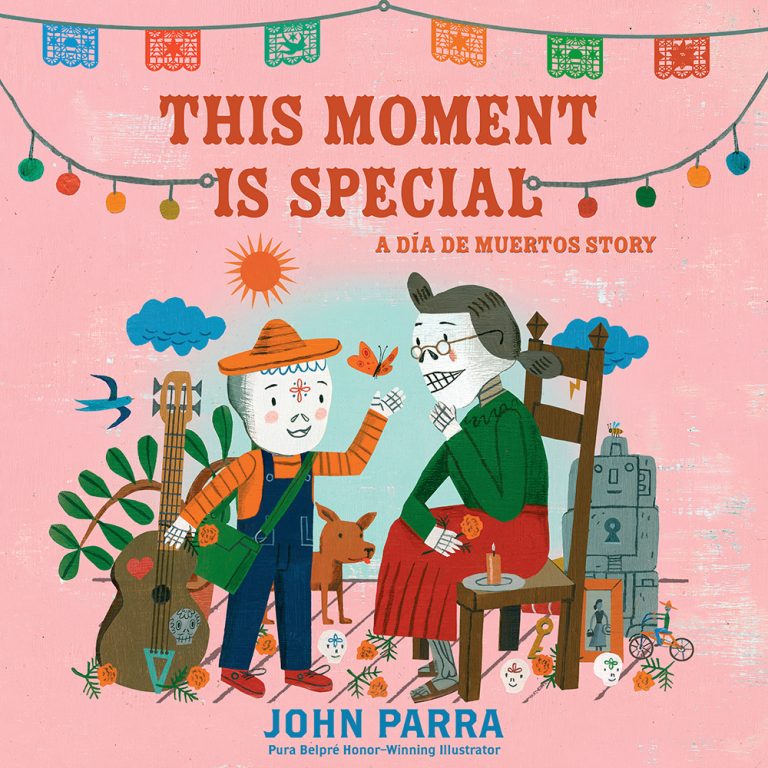
44:07 you think about, what you want to fight for. This is when the magic happens. And right there, that's it. That's the magic. That's that's it. I get to work on this today for the next number of months till I'm done. That's it. That puts a smile on my face. That's like us. We do this podcast. We love talking to so many people and getting inspiration and it gets us going and it's like fuel. So any words of wisdom that you could share as like a takeaway for our audience? Again, just just keep persevering, keep going, keep working at it. I also was going to say I do have another upcoming project called another book that I wrote and illustrated. And the thought of being a writer was not
44:48 something on my agenda. And so don't limit yourself either. Don't limit to if some offers come in about if you they give if you're an artist and they give you a chance to write, accept it. See what happens. don't feel like uh threatened by it. Also, you won't win every single day you're in the studio. It's just, you know, sometimes there are days where things don't work out, but there'll be some happy accidents, which is actually a good thing. But if they don't work out, it's okay. It's just the one day you tell yourself, "Tomorrow is a new day. You come back, you start again, brand new, brand new game, and you just keep going." And so, that's
45:25 just a part of it. And I guess that's all the advice I have. It was just so incredible to get to know you and thank you for being so open and so candid about your experience and this industry. Sometimes this industry feels a little bit like a dream for a lot of people. So finding the details can be hard within the dream, especially if you're not actively working. You're just looking to get started. So we know that people listening in who are emerging, who are trying to get to where they want to be, are really going to appreciate everything that you've shared today. and thank you so much for having me. I'm really honored to be here talking with
46:01 you today. It's always a pleasure. Thank you so much. Thank you so much for coming on. And again, uh thank you Storytellers for listening to the Storyteller Show podcast. Make sure you subscribe to our newsletter and uh make sure to subscribe to our YouTube channel. We appreciate it. Take care. Until next time. [Music] [Music]