0:00 Illustrators and picture book authors, entries are open for the Storytellers Shelf podcast consumer awards. Win a cash prize, a featured interview, and more. Get your work seen, celebrated, and supported. Submit now and join the family. [Music] Hi everyone and welcome back to the storyteller shelf podcast. I'm Jackie here again with Teresa and we are back for our middlegrade Marvel series and we have another special guest all the way from Egypt today chiming in to speak with us. So without further delay, Ila,
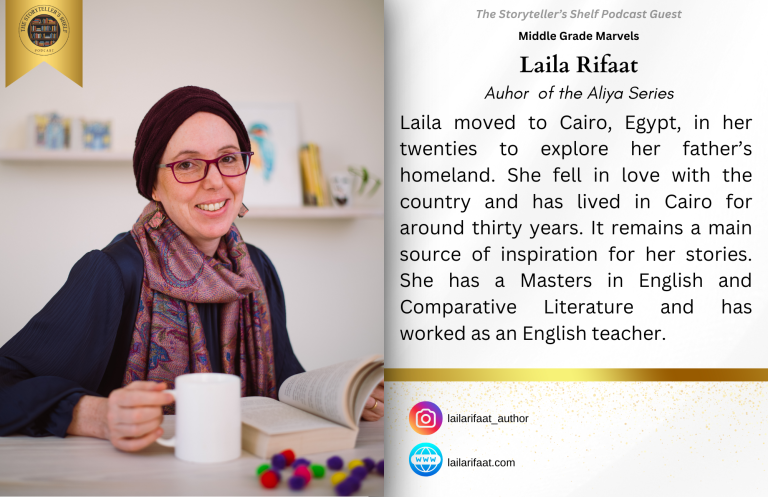
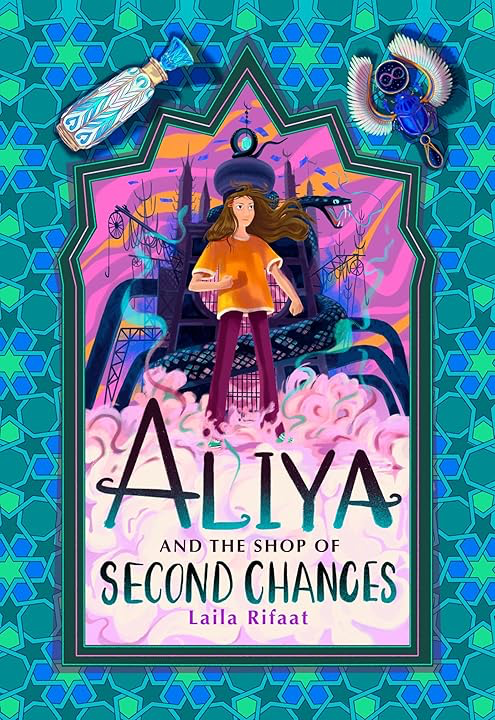
0:47 will you tell us a little bit more about who you are? Okay. Hi everyone and thank you for inviting me. I'm Laya Rafat and um I'm based in Cairo, Egypt. I actually grew up in Sweden, but um I'm half Egyptian and I came here in my to study to Cairo and ended up staying, getting married, settling down, and I'm the author of a middle-grade series fantasy called Ala. The first one is called Ala to the Infinite City. The second book in the series is called Ala: Aboard the Time Train. And this is third part coming. The third and last part is coming out in one month. Ala and the shop of second chances. So this is about an Egyptian girl who uh goes off to a
1:33 time travel academy and she meets characters from all over Egyptian history and yeah that's basically a very short description of what I've been up to the last 2 three years. That's amazing. I I'm fascinated by the fact that when like your book is is beautiful. I love the cover and I love that she's wring on it's like a magic carpet and and that she does like a time traveling thing. I I love stories like that. And the fact that you're also living in Egypt and Cairo, I mean that to me is fascinating. as a as a youth, I was always like, I'm going to become an Egyptologist and I'm going to go into the pyramids and like that to me is like the thing, you know, and your
2:16 characters, you know, you have her going in different adventures. So, it's like an adventure story. So, tying that together, if you were a superhero, what would you be and what would your superhero name be and why? Oh gosh, that's really hard. Well, me and my kids and my husband, we have this game that we've been playing for, you know, when they were younger and then we all had superhero names, the whole family. So, I think my husband was Captain Kofa. Kofa is like, you know, it's like some kind of meatball. And I think I was, you know, Captain Basila, which is the onion. And so, I guess I would be Captain Basil. This is the piece. You know, we all had names like that. So
3:00 food is a great enough answer for us on here. We are big foodies and so you don't need to explain it anymore for us for you know something my husband came up with and that the kids found funny you know cuz that's the kind of stuff they were eating every day. So I love that though because sometimes the best ideas you ever have are just things that came from memories and things that you do with your family. Inspiration right for another book who we don't know but we'll stay tuned. So, we know, of course, that you have authored a trilogy. Can you take us back in your mindset and tell us what inspired you to write for middle-rade readers? And how do you tap into the perspective of this
3:41 age group when you're actually writing your stories? That's a good question. And uh I think I think somehow it's about tapping into yourself as a 10year-old or or 12year-old or just trying to remember what how you felt and what you were like but also studying children around you. So I am fortunate enough to have kids that age myself. So I try to look at them and see how they speak um how they speak to their friends. And suppose you're trying to like avoid using slang and things that are just in vogue at the moment because that's bound to kind of be p by the time that your book comes out. So I was given the advice not to try to do that. But just kind of on an
4:28 emotional uh level what would what are the struggles that you deal with at that time? And somehow I think we um we still have something of those struggles still with you know we're still struggling with basically the same things maybe with more maturity but you know lack of confidence and and fear of of being alone fear of abandon abandonment and all these things are still kind of there somehow and we remember them. there still. So, um I guess that's what I'm trying to tap into and and use. But it's of course it's it's very useful to have children around you and kind of observe them. I love that because I do the same thing for my own stories like where you feel like you
5:15 I have children as well and I feel like it helps to have that creating that sort of muse in a sense that helps you to write more write better and if you read if you write a chapter and you have your children there and they go okay what do you think about this book or what do you think about this part what should I change something that's kind of I kind of have my kids appear on that as well but was there one moment or scene from your latest middle-grade book that you loved and why does it stand out to you? This episode of the Storytellers Show podcast is brought to you by Harney and Suns fine tease. A perfect companion to every story. Whether you're reading,
5:52 writing, or just enjoying a quiet moment to yourself, Harian Suns offers a beautiful selection of teas to elevate this experience. From classic blends to unique finds, every cup is crafted with care, just like the stories we love to share. shopcarnney.com/disount/stoteller and storyteller is in all cap. Now, let's get back to the show. I know which parts I particularly like, but I'm not sure why exactly. But there's one uh part where Alia um has a flying carpet lesson and she she discovers that she actually is quite good at carpet flying and she's a character struggling with self-confidence and she's kind of not so good at things throughout the book and
6:38 but then um she goes into this uh lesson and it's like a big what you call where planes are like hanger. Is that called a hanger? Yeah. and it's full of these carpets and they're all snoring. They're in big stacks like that and they're, you know, and you have to kind of in order to to get the carpet to ride, the carpet has to choose you. So, you have to kind of wait until one of them kind of decides to be your your carpet. So, she finds this carpet in a separate room because she's inexperienced and she cannot ride with the rest of the class who are more experienced than her. So, she gets to ride like another like not as fancy carpet and she's a bit upset
7:21 about that. But anyway, she ends up mastering carpet flying and that scene I liked it just because it was fun to ride. It had a lot of, you know, I could play around with the flying carpet and I tried to I used to ride horses and ponies. Um, and you know, if you've ever ridden ponies in a this kind of, you know, they're quite naughty and they would do anything to kind of get you off and, you know, do do all kinds of tricks. So, I thought, why not combine that kind of characteristic with with the flying carpets? So, it's pretty much like a riding school, you know, but with carpets. So, it was fun to kind of think of ways in which the the carpets could
8:00 be naughty and how the the students had kind of mastered the art by like being firm and all that stuff. So, so that scene I liked because it was I guess because it was also fun to write it. I do know the ponies they can be not so nice to say. That's perfect inspiration for I think a flying car. Yeah. I even thought of like giving them funny names based on like raceh horses, you know, they usually have these weird names. So, the carpets are called things like inferno and marauder and things like that, you know. So, that was inspired me to kind of come up with uh the persona of the flying carpets. That's so cool. We're going to have to have you come
8:43 back on and chat about how that even came in your mind. Oh god, who knows? So we consider ourselves very fortunate to be able to speak with you because like we said you've at this point written more than one book. So we consider you very experienced in terms of being an author and we would love to ask you what's one trend, challenge or opportunity you see in the world of middle-grade literature today. Okay. I think the challenge maybe is not so much in the actual writing of the story. Of course, it's always difficult to feel unique because as you know there are no new ideas, only new combinations and to kind of usually we end up writing things
9:25 that we really love to read and so you have to kind of keep in mind not to get too close to say other things and often you you come up with this idea and you think it's brilliant and then you realize that someone else has written almost the same kind of thing. So that could be I think it's it's can be a little bit difficult sometimes. Um just but I think in the end I don't worry too much about it because again if you combine um ideas that already exist you come up with something unique in the end anyway. I also think it's a little bit challenging that there are so many middle-rade books being published at least in the UK where my book is published. So, there's this which is
10:05 great in a way, but also makes it much harder to stand out and it makes it harder to get a contract, I guess. Um, you really have to kind of come up with ideas that catch an agent's attention or a publishers's attention and that of course is not the easiest thing. Um, yeah, that's as for the challenges. I love to bring up something actually off camera. Leila and I were talking and we were just speaking about writing and publishing and she mentioned that there's kind of no guarantee that even though you've published previously that even a publisher you went with before is going to accept your new manuscript. And I would love to insert a an atypical
10:49 question in our script which is Ila do you have any advice for people on keeping up their confidence when it comes to trying to publish again? Well, I would like to hear some advice myself, but I'll do my best to answer you. I think you just have to remember what you love about writing. I kind of call it going into my cave. That means like I'm going to go back into my writing cave. I'm going to cut off social media. I'm not going to look at what everyone else is doing and all the awards they're winning and all the money that they're, you know, because again, it gives you such a skewed view of what's going on. Like I told you, I met somebody the
11:29 other day, an author who's doing really well now, but when I met him, he told me it took me 25 years to get published and um I loved his book. It's amazing. But you know, to reach that point, he had so much rejection before that and that's what you don't see. And I think we all always have to of course there are these outliers that just send in a book and it becomes a bestseller overnight, you know, but that's not the common thing. one has to remember how much work um that goes into those successes usually. And so also being a debut author and being in a debut group has taught me that you know the we shouldn't view each other as competition. These are allies
12:12 you know and um to kind of celebrate each other's success and that's really important and to be happy for for each other. So I don't I find that children's writing the the world of children's writing is really friendly most of the time and I love that and that the people I've met and the friends I've made are really supportive and that's a beautiful thing. So that's also where you can find comfort and support in groups, you know, with other writers who know what it's like. And and again my this friend that told me he spent 25 years getting rejections. Is that the friend of yours that is from Scotland? Yeah, but that he told me, you know, that uh he spent 25
12:54 years and I was so surprised because you think, you know, when you read the book, oh, and you see the success, he's had it so easy. But no, that's not true. The book is really it's written in such an effortless way. And to get to that level of effortlessness and also he's very funny without trying too hard. And that's another skill. That's another thing like how how how to vibe with kids and make them laugh without being kind of you know trying to make fart jokes and you know this kind of stuff being so too contrived that's also hard you know so but behind that there's a lot of work usually so yeah did I answer your question yes yeah no perfect perfect
13:36 answer and it was inspiring too because we always see the reward at the end we always see the happy ending for someone online. I think a lot of us just feel, you know, when when's it going to be my turn? But we forget that yes, there are people who it takes 25 years for them to really work on their craft or not even that just it's such a competitive industry that it can take you time to make the right connections and to be in front of the right audience at the right time. And there's nothing really to do but to be resilient. So, I think that's perfect advice is to be patient and to never think that you've missed a chance or it'll never happen to you because
14:17 that's not true. Exactly. And I think it's like only another writer will understand when you say, "I finally got published and what that means." They'll be like, you know, people who don't write like, "Oh, nice. That's nice." But for you, it's like, "But I climbed Mount Everest. Don't you understand?" You know? So, so that's why it's important to have writer friends who can kind of share your joys and your challenges with you. I think it's really important to be in a in a writer's group of some sorts and just to kind of get to share. I think I I feel like everything you said is going through my head like yep like a checklist of just as a writer you need
14:59 people and I feel like now like we're kindered spirits and I hope we could take the opportunity to say we're friends even now I know we're far away but I feel with that being said like I I was thinking about what you were saying I love all the advice that you've given because there's so many uh there's there's so much to be said about having good friends Don't compare yourself. Would you would you say that if you could go back in time, what's one piece of advice you'd give your younger creative self to work more on the discipline of writing? Um, I mean, I was very ambitious when I was young. I really knew that I wanted to write, but I would start a novel a day, you know,
15:40 and then just decide, oh, I'm not sticking with this. I'm starting something new. I mean, and I also never rewrote anything. And that was a big mistake like to realize that that in order to develop first of all you need to read a lot and I didn't do that either. I could give myself a list of things that I should have done to read more to read different things and then to really finish things and to get to start with a discipline of of writing every day even if it's not a lot. But I think one another thing that's really really important is to show your work to other writers. They don't have to be professionals. It's enough if they're on the same level with you, but getting
16:20 feedback and accepting feedback is so important. Um, when I was starting out seriously trying to, you know, query and I had the ALA book in its first draft, you know, I was in a writing group and that was the best thing ever, I think. Um, this is where I learned it was like a very steep learning curve because people just told me the things that weren't working with my writing. Like your protagonist is not active enough. Your protagonist is just seeing because I was also writing fantasy. So it's very easy to get stuck in just describing cool stuff and going to cool places. So just someone telling you but why does this matter? You know what is your
17:02 character doing? Why why did she go there? Why are you telling me this? So these are these very basic things that you're not aware of when you're starting out. Be like read, write, try to have discipline, and join a writing group. That's what I would tell my younger self. Maybe I would have gotten published 20 years ago if I had done that. Who knows? That's great advice. I think we always hear that you should read more as an author. And I know I'm not the only one who says I need to read more. My TB Red list is next to me. There's about 50 books standing there getting dusty because I think I don't have the time. But you have to make the time because this is your craft. And
17:44 knowing what other people are doing is actually going to help you not just get ideas, but see what the market is like. And that's really important so that you can see how you fit into it and what you can bring and enrich. Right. Yeah. I mean, I'm a busy mom, but I I I use audio books because that allows me to listen while I'm cooking, listen while I'm driving, you know, and and I've realized that because of the audio books, I can get through like a book a week at least cuz I drive a lot, you know, training, driving to football practice, driving, uh, cooking, going shopping and all that. So, the audio book in the car. Yeah, that's perfect. when you're
18:27 reading, do you specifically choose based on your genre? As since you're a middle-grade author, do you do you look at those books more for inspiration or do you just do reading in general? Well, initially I did read a lot of middle grade to learn the the genre, you know, that I was writing in. But now that I have a bit more of an understanding of the genre, I'm I I'm trying to read all kinds of books and I get inspired by different things like um could be anything really because you can I don't want to be stuck just in middle grade. You could end up taking an idea from another kind of book and bringing it into middle grade and creating something
19:12 new, something unique. So, I like to read different different things. And I'm reading always like five or six books at once. I don't know if that's advisable, but that's kind of what I do. I'm very greedy when it comes to books. I just collect them, you know, and uh we have I'm in a book club also with a couple of friends and we our project is to read one book from every country in the world. Yeah. So, so we've been to Japan, we've been to Chile, we've been to quite a lot of countries and that also is good because then you end up reading books that you never would have read on your own, but because it's a group deciding, you know, and there are certain criteria
19:53 I end up reading. So, I think it's good to read wildly. But if you're writing of course in the middle genre, you also have to understand the conventions the you know I took um a course in uh writing for children and that also helped a lot. So I studied structure and then I read a lot of middle grade so that I could see what writers were doing and how they were structuring their stories. So in the beginning I would say yes definitely it's very important to to read a lot of middlegrade. We are on our last question. So, you've been a real trooper for us, but this one is hopefully a nice and easy question for you. What is one thing you'd like your
20:35 readers to take away from your work or to know about you as an author? Well, with the Ala series, I wanted them to just I wanted to create a world where the reader just wants to live, you know. Um I was actually of course you always have this intention to to give some kind of message but for me it was also about creating it was about entertaining a lot of it is about entertainment and it's because I think a fantasy entertainment it's also important it's important to be able to pick up a book and disappear into a different world but of course the reader should also be able to relate to the main character and kind of share the struggles and you know recognize
21:20 themselves and especially with my main character because she is Egyptians. Um, I was also hoping to reach children who look, you know, who are maybe from uh the Middle East, you know, who might not have seen themselves represented uh in a fantasy novel to be able to reach them and and show them that, hey, you could also be the hero or the heroine, you know, of a story like this uh to kind of contribute to the diversity that we need in our children's literature. So, that was was uh something that I aimed for as well. I think that's beautiful and that I love that you said diversity and creating that and having representation for your characters. And we just want to
22:01 say thank you so much for coming on our podcast today and sharing. Thank you. And your beautiful work and your inspirational in hopefully to inspire other writers. And just want to say to all of our listeners, thank you for making it this far. And make sure to check out Leila's page on our episodic calendar that's going to have all of her information and where you can get her work and um find more information about her. So again, thank you so much for coming on our podcast today. We really appreciate it. Thank you for inviting me. It's great to be here. [Music]