Day 1 set a strong foundation with two insightful and complementary sessions. Shifa explored the author–agent relationship, offering valuable perspective on communication, expectations, and building a successful professional partnership. Donna reminded us of the importance of preserving childlike wonder in storytelling, encouraging creators to reconnect with curiosity, imagination, and joy as essential elements of meaningful stories.
Today, we build on those ideas with an inspiring session from Paula Banks, who focuses on nurturing a child’s voice through creative confidence, expression, and representation.
We invite you to continue the conversation beyond the session by connecting with fellow attendees inside our community spaces. You’re welcome to join our Facebook group, and for real-time discussion, we’re also hosting a live Discord channel throughout the summit. Please note that all community spaces are intended to remain respectful and professional; we reserve the right to moderate discussions and remove participants if these guidelines are not upheld.
We encourage you to subscribe to our YouTube channel to stay connected with future content and updates.
As a reminder, this session is part of a paid summit experience. Please respect our community by not sharing this page or the video link publicly. Thank you for helping us preserve the integrity of this exclusive event.
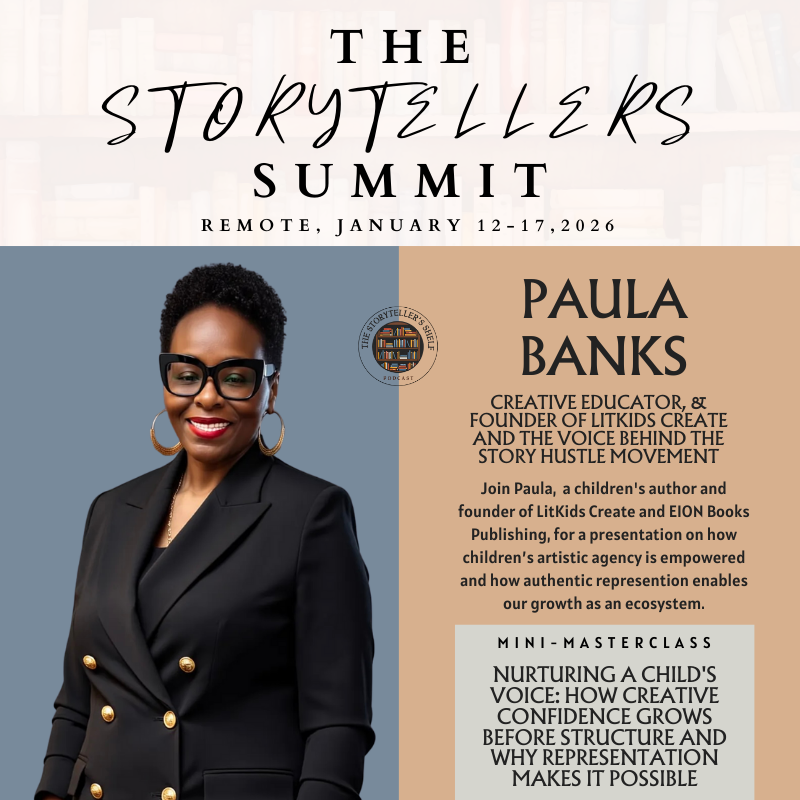
How Creative Confidence Grows Before Structure and Why Representation Makes It Possible with Paula Banks: Paula is a children’s author and creative educator who teaches families how to build confidence through storytelling. She is the founder of LitKids Create and EION Books Publishing, and the voice behind the Story Hustle movement, a growing ecosystem of tools designed to help parents support their child’s imagination and self-expression at home. Her work includes The LIT Writing Method™, The Story Glow-Up™, and the Five Storytelling Types, frameworks that give families a simple, culturally grounded way to understand and guide their child’s creative process. Through workshops, school partnerships, and her Story Hustle TV series, Paula offers guidance that feels warm, practical, and rooted in real-life teaching and parenting experiences. She believes children thrive when the adults in their life slow down, listen closely, and make room for their ideas. Her mission is to help families do exactly that one story at a time.
Support Paula by visiting her Website, Instagram, and Youtube! Be sure to learn more about her books here.
Resource Guide for Representation in Children’s Publishing
If you are a children’s literature writer, understanding the current state of representation in publishing is essential. This is not only about tracking market trends, but about participating responsibly in the children’s book ecosystem. Awareness of representation helps you build creative confidence, identify meaningful comparison titles, recognize gaps in the market, and contribute to the long-term health of kidlit. Staying informed also allows writers to move beyond fear or guesswork and toward intentional, informed storytelling. The following resources are places kidlit writers should return to regularly to keep up with industry conversations, data, and evolving standards around representation.
Foundational Organizations and Industry Data
We Need Diverse Books (WNDB)
A foundational nonprofit organization that has shaped the modern conversation around diversity in children’s publishing. WNDB offers historical context, current initiatives, grants, mentorship programs, and resources for writers, educators, and publishing professionals. Following their work helps writers understand how representation impacts access, visibility, and opportunity across the industry.
https://diversebooks.org
Cooperative Children’s Book Center (CCBC)
The CCBC publishes widely cited annual statistics tracking representation in children’s and young adult books. Their data provides critical insight into who is being published, whose stories are centered, and where significant gaps persist. These statistics are especially useful for researching comps, understanding long-term patterns, and grounding conversations about representation in concrete data.
https://ccbc.education.wisc.edu/literature-resources/ccbc-diversity-statistics/
Lee & Low Books
A leading publisher of multicultural children’s literature with an extensive educational blog. Their articles address representation, bias, writing craft, and publishing practices in clear and practical ways. This is a valuable ongoing resource for writers who want to strengthen both creative confidence and ethical storytelling skills.
https://blog.leeandlow.com
Trade News, Reviews, and Industry Conversation
School Library Journal (SLJ)
A major trade publication covering children’s and young adult books, publishing trends, censorship, representation, and library advocacy. SLJ is particularly useful for understanding how books are reviewed, challenged, and discussed within school and library systems.
https://www.slj.com
Publishers Weekly – Children’s Bookshelf
Provides industry news, deal announcements, trend reporting, and reviews focused on children’s publishing. This resource helps writers stay aware of what editors are acquiring, how books are positioned, and how representation appears in market discourse.
https://www.publishersweekly.com/pw/by-topic/childrens
Community-Centered and Identity-Specific Resources
The Brown Bookshelf
An organization dedicated to amplifying Black voices in children’s literature. Their curated book lists, author features, and literacy initiatives are excellent tools for discovering comps and understanding community-centered storytelling traditions.
https://thebrownbookshelf.com
Latinxs in Kid Lit
A collective that highlights Latinx voices in children’s publishing through interviews, essays, book lists, and industry commentary. This resource is especially valuable for understanding cultural specificity, nuance, and ongoing conversations within Latinx kidlit spaces.
https://latinosinkidlit.com
Disability in Kidlit
A platform focused on disability representation in children’s and young adult literature. It offers essays, reviews, and resources that help writers move beyond stereotypes toward authentic, multidimensional portrayals of disability.
https://disabilityinkidlit.com
Reading While White
A long-running blog examining whiteness, power, and privilege in children’s literature. While not a writing craft resource, it is useful for understanding structural dynamics, gatekeeping, and historical patterns that shape publishing and readership.
https://readingwhilewhite.blogspot.com
KidLit in Color
An organization that highlights authors and illustrators of color in children’s publishing. Their recommendations and community presence help writers stay aware of new voices, emerging titles, and contemporary representation in the field.
https://kidlitincolor.com
Craft, Creative Confidence, and Ethical Storytelling
Writing With Cultural Awareness
Creative confidence grows before structure. Many representation challenges stem from fear, hesitation, or misinformation rather than lack of skill. Writers benefit from approaching representation as an evolving practice rooted in curiosity, humility, and emotional honesty rather than perfectionism.
Writing With Color (Archive)
An extensive archive addressing common questions about race, culture, and representation in fiction. While no longer updated, the existing posts remain highly relevant for writers seeking clarity around common pitfalls and thoughtful approaches to storytelling.
https://writingwithcolor.tumblr.com
Professional Context and Industry Standards
Society of Children’s Book Writers and Illustrators (SCBWI)
A professional organization offering programming, panels, articles, and community support for children’s book creators. While broader than representation alone, SCBWI increasingly addresses diversity, equity, and inclusion within industry standards and professional expectations.
https://www.scbwi.org
Using These Resources as a Kidlit Writer: These resources are not meant to be consumed all at once. Instead, return to them periodically to research comparison titles, track industry conversations, notice patterns in who is published and awarded, and understand how representation intersects with access, gatekeeping, and readership. Staying informed supports creative confidence, ethical storytelling, and meaningful participation in the evolving world of children’s literature.