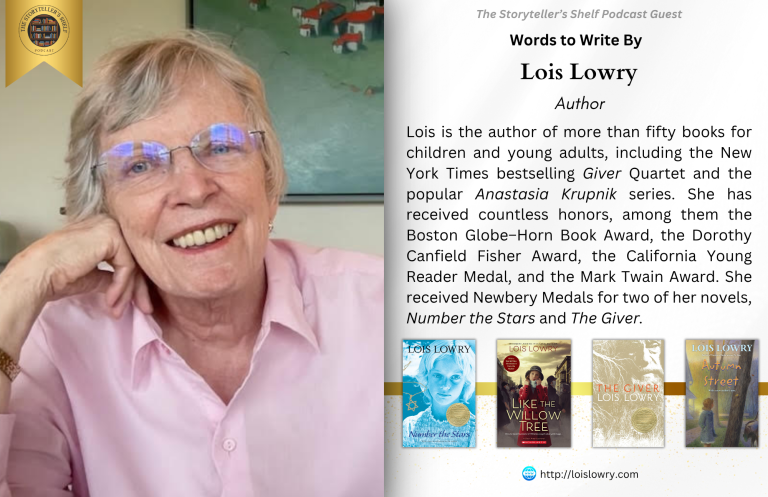
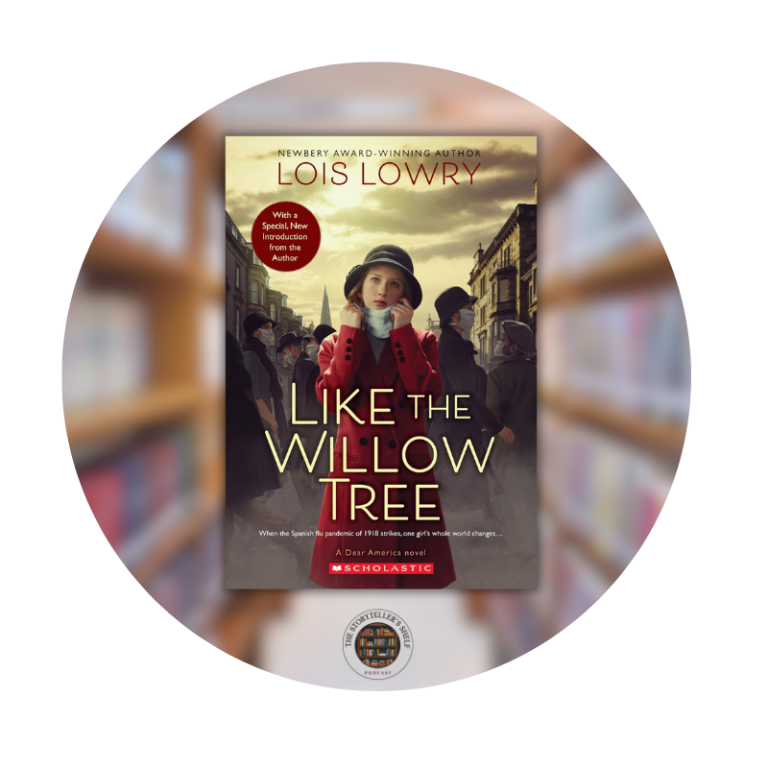
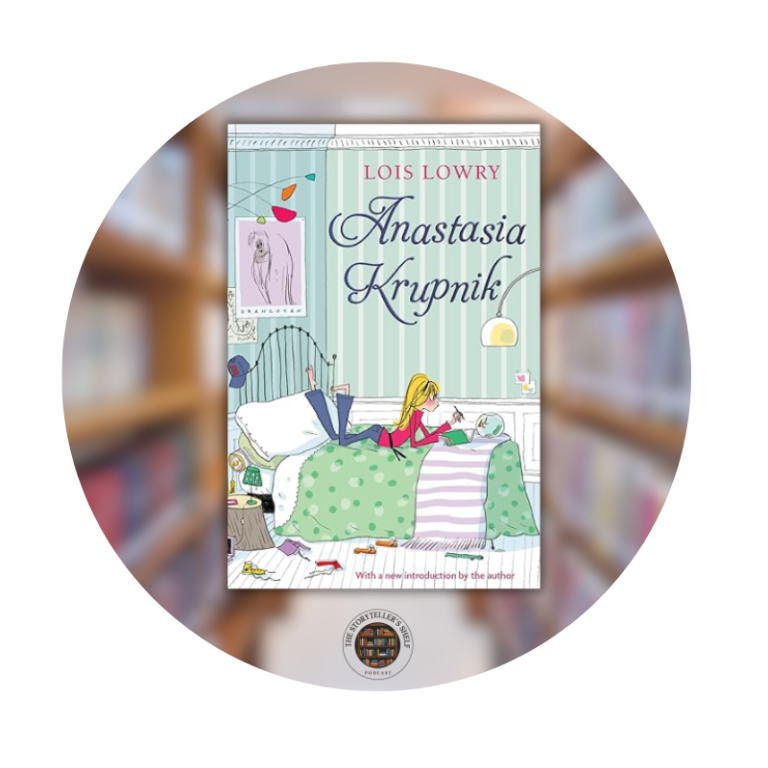
0:01 The Big Bang Notable Book List showcases titles expanding the universe of young minds, one read at a time. Imprints at Holiday House and Simon and Schustster already submitted their titles. Have you submit your books for free for a chance to be featured? Learn more at the storytellershelfpodcast.com/submissions. [Music] Hi storytellers and welcome back to the Storyteller Shelf podcast. It's Jackie and Teresa here with you once again as
0:46 always. Thank you so much for tuning in and today we have a guest that really doesn't need much of an introduction. So, we are just going to hop right into it like our tradition. So, Lois, we are so pleased to have you here today. It is really such an honor to speak with you. And I'm going to start off asking probably a question that's on everyone's mind, which is you said that you were a solitary child who loved books and imagination. Do you remember when you first thought, hm, I want to be a writer? I don't remember that specific thought. It was kind of part of my being, that feeling. It existed within me. But I will tell you that
1:32 I had a baby brother born when I was five. And by the time he was two, which makes me of course seven, I know I was writing stories for him and reading them to him. And my brother now, a retired doctor would be 83 years old. And it really pisses me off that he does not remember skezix the magic airplane which I wrote for him when he was two or three years old and which he loved at the time. Any rate that's my memory is of constantly not only reading stories but creating
2:19 them even if only in my mind but often writing them down too. Notebooks were a part of my existence since the time I was very young. And I had an older sister who was never as introverted or introspective as I was. Her her gifts were elsewhere. She was very pretty. I wasn't. She was homecoming queen in high school the year that I won the Latin prize. So you can see we were very different. But she nonetheless was the one who when I was a very little girl. In addition to my mother, my sister was the one who read to me. And we were so fortunate that we lived in a house
3:04 filled with books. My mother had been a teacher before she married. So that was part of our lives. And and I I don't know that that's true for children now as it was when I was a little girl because there are so many distractions. But it was a very valuable part of my life and what made me want at an early age to try to answer your question again. Made me want to be a writer. >> That is so endearing. I love hearing that you had a journey with reading really from when you were a kid. Um I think you're right. It's very hard today sometimes to find kids who love reading. And it's really important that the
3:49 people around us encourage us to read because that's when you get the flavor to read and to write, which I think goes naturally hand in hand. Um, and I'll say my big sister, if she's listening to this, we'll find out. She's the one that really helped me get into reading. It took a lot cuz I was not much of a reader. I had struggles reading and without her I probably wouldn't have gotten there. So, how did you come up with the idea for the giver? Was there a specific moment in spark? >> Yes, it was. I'm chuckling as you ask that and I'm glad you asked it early and we'll get it out of the way because that's the question for many many years
4:36 that I have been most often asked and there have been times I regret in the past when I have maybe not shown it but but felt impatient when one more kid says to me how did you get the until the moment came when my own granddaughter probably Ted at the time asked me that and I realized then that for every kid who asks it, it's the first time they've asked it. Even though it may be the 2,000th time I've answered it. However, I will answer it again for you and your listeners. I don't recall what book I had published prior to The Giver, but it would have been at a time when I had finished a previous book. And this always happens.
5:21 It's time for me to begin a new book. I'm aware of that, but I begin feeling as though I'm never going to have another idea. My brain has died. I'm going to be poor and living in a homeless shelter because I will never have another idea. And then something comes to me. And in this particular time, it would have been I think the giver was published in 1993. So it would have been around 1992. Uh, I lived in Boston and my parents were very elderly and they lived in Virginia where they had retired to be near my brother who was a doctor and I would fly down there every six weeks or so and spend a few days
6:06 visiting. My mother was at a nursing home. She was blind and she was on oxygen. Her mind was intact, but she was completely physically handicapped. And so I would go visit her first. And she'd love to talk. She'd love to reminisce. And one of the things she often talked about in those last months of her life was my sister whom I have already mentioned, the one who practically taught me to read. And uh my sister had died young. And mother talked often about Helen and even about the last months of my sister's life and about her death. Then my mother would tire of course and so I would walk down the hall into the
6:53 next building where in the assisted living building my father was now living. He was up and around and his health was much better than mothers but his memory was starting to fade as as it does in those last years. And so my brother and I had prepared a photograph album for my dad. And when I visited him, we would turn the pages of that album and each photograph and there were pictures from his past, my shared past with him. Each one would trigger reminiscences and we would talk about those various small pieces of life. He would smile. I was born in Hawaii and I had a I believe she was Japanese American nursemaid who took care of me as a small child and my father had been
7:38 apparently very fond of her. I don't mean in any any creepy way. He just thought she was a a sweet person. And so he would always smile looking at her picture as she was holding baby Lois. But any rate, there would be suddenly this particular visit, this one picture of two little girls matching dresses and he smiled and said, "There you are with your sister." And then he looked a little embarrassed and he said,"I can't remember her name." And I said, "Her name was Helen, Dad. She was named for her grandmother." And he said, "Yes, Helen." And then he said, "Whatever happened to her?" And I had to tell him she died, Dad. Because he had forgotten
8:22 it. And of course, he was devastated. And so I turned the page and there was another picture of a dog in our past or a car. My dad was a car guy. There was the Chrysler he loved in 1954 and it changed the topic and and we would talk about something else. But then next page there are the two now the girls are teenagers. There are the two blonde teenage girls laughing and dad smiles. He says, "Oh, there you are with Helen." And then he said, "Whatever happened to her?" And I had to do it to him again. And so it was that particular day. I don't remember what time of year it was even, but I remember driving my rental car back to the airport and thinking about that and thinking as
9:08 writers do. And this phrase is a phrase that always starts the imagination, thinking what if uh and and it was what if what if we could give somebody a medication, a shot or some kind of medical treatment that would obliterate all the sad memories. uh they would never have to think about those scary moments again or those devastating times. And wouldn't that be nice? And of course, the more I thought about it, the more I realized what a tradeoff that would be. And by the time I got home, short flight, Charlottesville, Virginia to Boston, I realized that that's what I was going to write about. And of course
9:53 I immediately realized that that would have to be said in the future because we don't yet and this is some years ago but even still it's true that we don't yet have the capacity to manipulate human memory. I bet that time will come but I'm not going to worry about that today. Uh any rate but that was the beginning of that book and it was the first book I wrote. This is veering away from your original question but I'm just uh this is how I write a book too. I go off in different directions. It was the first book I wrote on a computer. Up to that time, I had written on a typewriter. Remember typewriters? You're too young. Remember carbon paper? Oh my
10:32 goodness. Remember white out if you made a mistake. Anyway, I had a daughter who was working at MIT and said, "Mom, you must get a computer." And she said, "I could get you a discount through MIT." And so she helped me to buy what I thought was a computer. It was enormous. I remember it cost $4,000. And the printer would print out, you may remember this, the paper all came out attached to each other. You would have to tear the pages apart. And it turns out in retrospect, I realized it was a a dedicated word processor. It wasn't really a computer. Nonetheless, it changed my life in terms of writing. it made it so much easier. Uh not not the
11:20 imagination but just the mechanics of it. And in the days before that, for example, if I wanted to revise something, I never revised as much as I should because it meant retyping. If you if you added a paragraph on page 13, you had to retype all the pages up to page 200. And then this machine, this enormous noisy machine made it so much easier. So that that was memorable. But but that was also in answer to your question gave me the idea. And in fact, I remember that when I was writing the last pages of the giver, and this is now going to be some months later because it took probably close to a year to write
12:06 that book was uh was when my mother died. I remember my my brother calling me to tell me mother had died just as I was ending ending that book. So there there you have that's the answer to the most frequently asked question. >> Thank you for answering that. I know it probably doesn't get easier to answer even though you had to answer this question thousands of times. Is that accurate? >> Thousands of times. I I I get email of course every day and every morning that's the first thing I do I go to my website email and every day there will be between 20 and 50 emails and of those
12:52 even today every day probably at least four will say how did you get the idea for the giver however when I'm answering an email I can just paste in the answer I don't have to go through the whole thing Then >> the modern marvel of copy and paste. It helps us too. But thank you again for sharing that. I know um from my personal experience having family members that have dementia Alzheimer's. It's really it's more than just what it seems like on the cover. It's an extremely emotional experience and it's touching to hear it. And hopefully, you know, you can copy and paste more now instead of saying it again. Also, for the record, I would like to
13:38 point out I I know what white out is. Got it. >> That reveals your your generation. >> Same. Because I'm what I don't even know what they call it. It's an in between age. So, it's an in between a Gen X and a millennial. And so, my parents are uh from the boomer generation. And we did have a typewriter in our house. And I remember the computers being expensive. I remember the first computer we had and it was it was a marvel. My father had it in the office and he was an engineer. So I do remember that. >> Yeah, it really changed our lives all of us whatever you know writers or whoever. It just was an amazing change along those lines and here I'm veering off
14:24 again. But >> it's okay. We like that. >> One of the things I most enjoy is choosing names for book characters. I loved him. Yeah. >> How do you choose names? Because I like to go through the census and the baby registration list to find names. >> That's true. Yeah, I read those frequently, although I I haven't used them in the past for choosing book character names. And oddly I don't have a formula for that because for reasons that I can't explain the name of a main character will often just the character will appear to me with a name and almost always it turns out to be the right name. Only once do I remember changing the name and that is in a book that is
15:10 the fourth book in the giver quartet. So it's there are four books three that follow the giver. The fourth one, the longest one is called son. S O N. And it begins with a 14-year-old girl giving birth to a baby which is taken from her. Okay. And that character, that girl appeared with the name Mary. And I began writing it with that name. And it felt fine until I realized that readers, not children, but critics, editors, readers, adult readers were going to give religious connotations to that name. and I didn't want that. It wasn't my intention. And so I did change her name. By and large, that's the only one. Most often they come with a name that proves
15:57 to be appropriate. >> Let me add one other thing. Many years ago, and you guys are too young, you probably don't remember these, but I wrote a series of books about a character named Anastasia Crupnik. Okay? And she has an unusual name, obviously. and and part of her angst in the first book, I think there are nine about her first book, she's 10 years old and she's mad at her parents about her name because all of her friends have nicknames that end in I. There's Jenny with an I and Susie with an I and her name. And also her friends are all getting t-shirts with their names on them and her name is too long to fit on a t-shirt. So there's just a silly
16:36 conversation with her parents. I was invited to some Midwestern state. I've forgotten which one and it doesn't matter, but I was at a college in Kansas, I believe. And a college theater class had written and was performing a play based on Anastasia Cuffnik. And there is a scene in the play which has been performed in other places now since then where the child and in this case it was played by a college girl says to her parents talking about the name look at my chest my name won't fit across well this college girl who was quite wellendowed uh it was it couldn't they couldn't do that so in that case she says all her
17:24 friends are getting shirts with their names across the back and she's look my back. My name won't fit across there. All right, that's just on the topic of names. But one other thing, I was once on a book tour in Australia speaking to Australian kids and it was right about the time when those Anastasia books were popular and I was talking about names because they had asked and I said, "So her Anastasia is she has an unusual name, but her best friend is named Jenny, Jennifer Macaulay." And I said, I chose that because she's not an important character in the book and I just wanted to give her a very common name and Jennifer in the States some years ago is a very
18:05 common name. I said, "Is that true here in Australia? Is Jennifer a common name?" And they all looked shocked and they said, "No, miss." Turns out I realized too late. The word common meant something different to them. It meant, how would you describe it? lower class or you know I meant it was a a frequently used name but they took it to mean Jennifer as a common name and they said oh no that's not a common name at all right another bit of trivia >> you're cracking me up with that what happens though when you travel I lived somewhere else I lived in Ireland for a short amount of time two years and every once in a while there was a word I said that meant something completely
18:50 different to them and it kind of makes you turned red in embarrassment. >> I've got one of those, too. Maybe this is the same thing you experienced in Ireland, but in the Anastasia books again. She has a friend I'm going to forget the details, but a friend's mother is is big and she wears something referred to in the books, the label is fat fanny panty hose. Okay, they couldn't publish that in in Great Britain because that's a very dirty thing to say. Who knew? You've traveled a lot, living places, visiting places for your book. Could you tell us if traveling and seeing the world influenced you in any way when it came to writing? >> I think only probably in this way. I I
19:35 am uh like most writers, I think an introvert, uh introspective, and I'm somebody who notices details. And so throughout my life uh being in different places for example when I moved to Tokyo when I was 11 years old very shy 11year-old girl but I spent my time absorbing everything. Didn't I didn't feel diminished by my in by my shyness. It just allowed me to be an observer. And that's what I've always been and what I continue to be. I've had to in the course of
20:20 being a writer, which I've done since I was 40. My first book was published when I was 40. I I wrote for magazines before that, but it took me by surprise when they expected me to go out and talk about myself and promote. I mean, that was never what I signed up for. And it was hard at first. I've learned to be comfortable doing it, but I've veered away from your question. And that has nothing to do really with my having traveled so much. I think the the heightened powers of observation have served me well because of course a book is enhanced by detail and and detail is absorbed through observation. Probably it wouldn't have mattered if
21:05 I'd never set foot outside of Pennsylvania where I spent my childhood. But I think I think my life has been enhanced generally by by my exposure to many different people around the world as well. >> So can you tell us a bit about your early publishing experience like getting an agent, working with your first editor? What surprised you the most? >> I have to think back a long way. As I mentioned, my first book was published when I was 40, which means that I wrote it when I was 39. Uh, I had married young, had children young, had four children before I was 26, and then I waited till the kids till the youngest child began kindergarten, and I went
21:51 back to college because I dropped out at the end of my sophomore year. So, I completed my undergraduate education. And then I was in graduate school working on my master's degree and began always with the goal of being a writer. But I began writing for local first local magazines and newspapers and then I don't know I was good at it I guess. I began getting assignments from larger publications but still they were magazine articles. Then when I was 39, if I'm remembering correctly, the Times, I published a short story in a magazine called Redbook, which was a popular magazine at the time. I don't know if it still exists. And if it does exist, it
22:34 no longer publishes fiction because none of those magazines do anymore. But this story was published and it was about a child. It was a story for adults, but it was written through the eyes of a child. It was autobiographical, although it wasn't necessary for anybody to know that. And after it was published, a book editor, a children's book editor from a major publisher contacted the magazine and asked to get in touch with me, did so, and asked if I would consider writing a book, a novel for young people, I think was the term they used. It's kind of surprising that that had never occurred to me because I had four kids who at that time would have been
23:20 probably middle school age and certainly there had been kids books around our house since the time they were born. But I was aiming toward an adult audience and yet when a publisher came to me and asked me to write a book that was so unusual for I'm not sure I even realized how unusual that was but it was. So I did that. They didn't agree to publish it. They said they'd be interested in seeing whatever I came up with. And that's when I wrote the manuscript for my first book. So, I did not go through any of the things you asked the question about at that time. For example, you said the word agent. I wouldn't have known what an agent was at that time. I didn't use an agent for my
24:03 magazine work. And and here this publisher had come to me. I didn't need an agent. Okay. So, I wrote the the novel. did not talk to the editor who had contacted me through the process, although I told her I would be working on it. And then I sent her the completed manuscript. I remember it had no title cuz I hadn't thought of one. And so they they gave me a contract uh and it said untitled manuscript. Anyway, then before the book was published, I got a call from the editor whom I had never met, but we had talked by that time on the phone, this predates email, and she said she was leaving the company. And so I was being turned over to another editor.
24:49 And as it happened, the other editor was, I mean, I didn't know this at the time, a guy who was quite famous and had been around in the publishing world for a long time. It was quite rare and still is for a man to be in children's publishing but he was head of the children's book department at H Hotton Methlin and he turns out I didn't know this at the time uh was an expert and still he's long retired but still considered the greatest name in picture book publishing. He was a graduate of the Rhode Island School of Design. He had done picture books himself. He published I don't know if you know these names but David Macaulay James Marshall others you
25:36 know top names picture book people and to be honest I don't think he knew very much about editing a novel but there I landed I started to say I landed on his lap but that would not be the case and we got along just fine and he remained my editor for many many many books until he retired and I never had an agent until after I don't know how many books 20ome perhaps and all with the same publisher H Hotton Mifflin and and all well- reggarded books you know got good reviews and the things one looks for but apparently I'm not remembering the details there was some kind of film deal that that
26:22 was handled badly and he got in touch with me he this editor and he said uh he and he apologized for whatever it was that had happened and he said, "You ought to get an agent. Uh an agent would have taken care of this better." So, uh that was the first time I thought about getting an agent. And I didn't I didn't know how I mean nowadays everything is so different. I don't remember how I found an agent, but I did. And she represented me well. And then she died. Any rate, so my my journey along that pathway was not at all traditional. And I I watch with some interest. Now, I started to say young writers, but they're not all young, new writers desperately trying to
27:07 get their first book published and and what they go through. And it just seems completely alien to me. I don't uh connect to it at all because I never went through that process. I did have a I've had various difficulties along the way because of the workings of the profession. For example, my agent, this is some years ago now, suddenly began to I don't know, our conversations took an odd turn. I couldn't put my finger on what it was. and and uh to make a long story short and and sparing you the details, it turns out she had Alzheimer's and the whole agency had to disappear and it was sold to another
27:52 agency. So then I had to scramble once again. But now I have a wonderful, she's now been with me for several books, but new, much younger, very competent agent. But I've not gone through the kind of process that I've heard, I'm sure you've talked about and heard about from younger writers. And another thing that's happened, well, here's an example. I mentioned all my books were published by H Hotton Mifflin. I was in the middle. knew I had a book under contract. This was during the pandemic when suddenly I I guess I didn't get a call. I saw the newspaper New York Times that H Hotton Mifflin had gone out of business, my publisher, and they had been sold to Harbor Collins. So
28:36 suddenly I was in the hands of a new publisher, but my editor disappeared. So new editor. So I've gone through I've observed and and to some degree suffered from the changes in the publishing industry. >> This is wonderful because you know they always tell you that there's like a formula that in order to be published that that's how you do it. And what you're telling me is that that's not how you have to do it. Something that I'm observing now and reading about but don't know anything about it is the increase of reputable self-publishing. Self-publishing used to be a kind of marginal area. In fact, I remember having I think of this with some
29:22 sadness. So I was in Florida for some to speak at a teachers convention or something and between sessions I was walking down a hallway and a woman came up to me and said could I talk to you for a minute and I said sure. She said my father who is and she named an age her elderly father has written a book and it's been published and I said oh good for him that's great and she said but what I want to know is when is he going to get paid? When is he going to get any money from it? And I wasn't sure what she was asking. And and I said, and this is true, I said, "Well, you know, writers only get p unlike people who get a weekly salary, writers get paid twice
30:02 a year. So, you never know how many books are going to be sold until you get paid at the end of six months." And and she said, "Well, it's hard for him because he paid so much to have this book published and he he's he needs to make it back." And it turned out, you know, he had bought into some fly by night. I I'm guessing self-publisher had his book, which is very exciting for this elderly guy. I don't know if it was a good book or not, but he wasn't going to make any money from it. And I didn't say that to her, but I I had to I had to fill her in on some of the unfortunate details. But now it appears that self-publishing
30:47 can be done in a more reputable way. >> Yeah. And I'm glad that you brought that up though. But I do want to ask though because you mentioned the things that you've gone through and you know you went a different route than what a lot of people go through in the traditional publishing. Like what were the some of the biggest hurdles that you faced? Well, you know, I I I don't know how to say this without sounding I don't know, arrogant, but I didn't I didn't encounter a lot of hurdles in the beginning. So, I I guess what I was was innocent and fortunate would be another adjective. This major publisher came to me, asked me to write a book. I wrote a
31:29 book. They said, "Yay, we'll publish it." It won an enormous award after it was published. And so, the publisher said, "Yay, write another one." And and so I I fell into very fortunate circumstances just happen stance and timing. I don't know what what maybe the stars came together in the right way. So the hurdles that I faced were of a different sort. They were sort of how do I manage a 10 room house and four children and my master's degree and also now this publisher wants me to go make a speech in Texas. what is that about? So those, you know, it's it's hard even to call those hurdles, although they felt like hurdles at the time, but I I never
32:15 really had to go through terribly hard times. My first book was very successful, and I've just continued to turn them out, and some have been more successful than others, but none have been colossal flops, but I probably could survive one or two of those if I had to. So I am not the right one to ask about hurdles. I I'm I I'm almost sorry to say >> you don't have to be sorry. I have to chime in there with there's a phrase that says no one's challenge is really comparable to another person's. So we all face difficulty in our own manner. So there's no worth in comparing what you went through versus somebody else's. But I'll say Teresa and I are absolutely
32:59 refreshed and both smiling right now to hear a happy hurdle. We want to hear happy stories. >> Exactly. Yes. And it actually is inspiring because I'm a mom too and you know we're at that middle school age like that you mentioned with my kids and so sometimes it's like when do I have time to write cuz I'm managing a household and two kids and a husband and all that like so I appreciate that because it's one of those things that they don't talk about when the part of writing that's not mentioned. So and and it is one of the things that I have sometimes depending on a question that I've been asked I have said to people I think it's very important when when
33:44 you're starting out to take your work seriously and to carve out I mean Virginia Wolf said it of course long ago but to carve out a a place for it. my h my my kids later later have said to me they they thought one daughter said she thought I was pathetic at the time but she went on to explain that in our house there was a room that was dad's study dad being a lawyer and he had a big desk in there and I put a little table in the corner with my typewriter on the table and that's where I did my work and that's what my daughter later said she thought that it was so pathetic I should have stood up and demanded a big desk. She
34:29 was she was one of the early feminists cuz that was that age. But I can sympathize now with her feelings then. It was kind of pathetic. Why did I settle for that? But it was important even to have that dedicated space. >> I think that I can definitely empathize with that cuz I have a little tiny desk too like it's right here. But um you know, you do have to have a dedicated space, dedicated time. Uh figuring out when you want to write and just be determined, I think is one of the the key takeaways that I'm getting from this. Um the last question before I pass the baton to Jackie, um thinking about your first book, Summer to Die. What was
35:14 it like to debut such an emotional story? >> Well, I think my sister had died many years before. In the book that I wrote that arose out of those circumstances, I made the two girls 13 and 15 and the younger girl tells the story. But in real life, my sister and I were 25 and 27 when she became ill. And obviously cuz they had asked me to write a book for young people, I told the story from that different age level. So when when she became ill, I was living in Cambridge, Massachusetts in a crummy apartment. My fourth child was born when my husband was in his last year of law school. And my sister, three years older, had married and was living in Texas because
35:59 she had married an army officer. So, she was in Texas when she was diagnosed with cancer. My children were very young, but the oldest was a little girl, the oldest, and probably of my four children always and still the most sensitive and attuned to other people's feelings. And she she perceived that mom mom mom mom mom mom mom mom mom mom mom mom mom mom mom mom mom mom mom mom mommy I suppose she called me then was sad and she had never met my sister who lived in Texas and we lived in Massachusetts. So I remember telling her about my sister and how we'd been little girls together and she you know she enjoyed the two little girls part of the story but but then as
36:40 it went on she became bored with it and she would slide off my lap and go to play with her siblings. But it was a story then that I ended up, I think, telling to myself. The way we try to make sense of things that have happened that are so senseless uh and and so tragic in some cases. And so some years passed with me telling this story of the two sisters. And I already told you how she was the the pretty one, the homecoming queen, and and the May queen, and I was the smart one. But but we were nonetheless best friends, sidekicks, partners in crime sometimes when we were kids. And uh so that was the story I told to myself for many years. And then
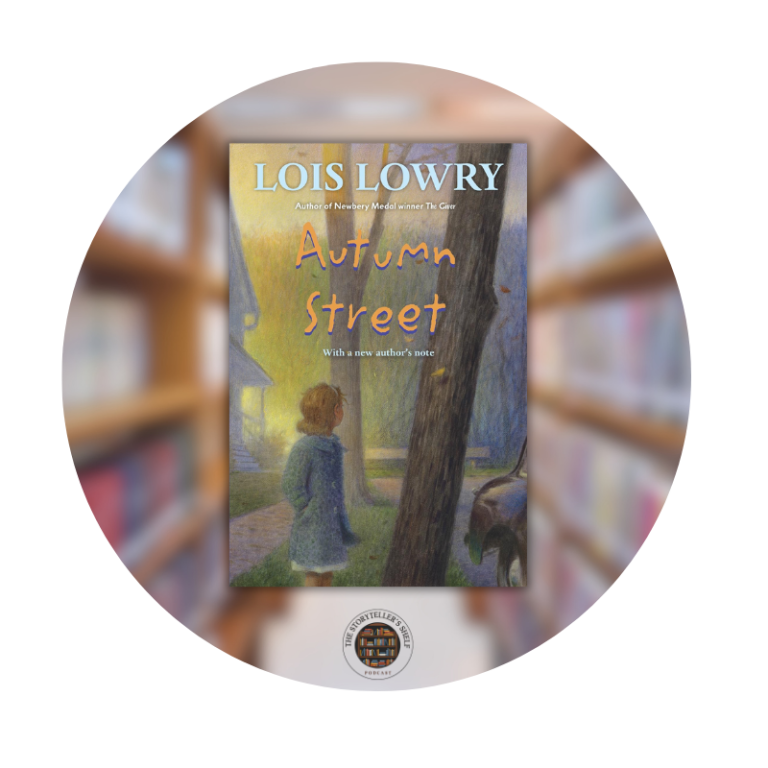
37:24 after years have passed, this editor comes to me and says, "Would you write a book for young people?" And that's the place I found to put that story down and tell it in words and and discourage it as it as it were. I don't know whether it would be true that most people writing fiction, a first piece of fiction would draw on something autobiographical. I mentioned the short story that that brought me to the attention of the book editor and that was also autobiographical. So I think I did draw on my own young self for a lot of early work. My favorite of all of my books, but one nobody's ever heard of was also autobiographical. It's a book published in I think 1980 called Autumn
38:09 Street when I had a childhood friend who was murdered. Again, a set of terrible circumstances and something that I had lodged there in my brain in my heart for years and then I found a way to put it down on the page. >> All right, Lois, you have told us about inspirations for some of your stories. So, now let's talk a little bit about writing craft. So, do you outline your stories before writing or do you have any particular exercises that you do that help you get into the writing process? >> No, I'm completely intuitive and I will I will tell you a story now that has a bad word in it. Once this is some years
38:54 ago, I was in New York for some event and was in a cab and the cab driver I maybe he asked me what I was doing in New York and I I don't remember where I was but it evolved that he knew I was a writer and so he said as many people do that he'd been it had been pointed out to him that he'd had a very interesting life and a lot of people thought he ought to write a book but he didn't know how to begin. So he said, "So how do you how do you write a book?" And I of course didn't have a glib answer for that, but I I talked about using my own memories and and recalling things and reliving them in my mind and and then sort of magically they would find their
39:35 way to paper and pen and I don't know, I just babbled on for a while. And then he said, "You're not the only writer I've ever had in this cab." And I said, "I'm not surprised. This is New York after all. And he said, "Last week I had Leon Urus in the cab." Now, that's a name from the past. And you might not, but at the time it was a very well-known name. He wrote a book called Exodus, which became a very popular movie, good writer. I never met him, but this cab driver said Leon Urus was in the cab. And I said, "Did you ask him how to write a book?" And he, the driver said, "Yes, I did." And he said, He didn't say anything about that magic He told
40:21 me to use index cards. So, whatever it takes. I have never used an index card in my life. You know, magic is a fatuous word, but I sit down with a character in my head who speaks to me in a way and tells me their story and I put it down. And I don't know how it's going to end when I start it. or maybe sometimes very soon I will I will begin to perceive an ending but I won't have any idea how it's going to get from point A to point Z and and of course that's the hard part all the part in the middle all the complications that turn it become plot but I have no index cards and I have no outline I have only my own thoughts I
41:06 mean I'm I'm currently even though I'm I'm 88 years old but I am working now on a book I thought I was finished cuz I typed to the end, but it isn't finished because I have to go back now and I have to figure out how to connect this part of the plot to that part because they're both interesting parts, but they don't really come together. And so, that's a challenge, but it's it's fun at the same time. But also, it would be easier if I had the damned index cards. I just can't do it that way. I can I can make an outline. I I could sit here and outline a story, but then when I would go to follow the outline and write the story, I I'd be sick of it. I would be bored
41:45 because I've already done the outline. So, I just can't do it that way. But I know there are much more organized writers. I am not one. >> Here on the podcast, we try our best to be a resource for people who are new at writing or trying new writing techniques. And Theresa and I have done a lot of research on how to guide people when it comes to making those things like outlines and character interviews that help you stir the brain. But I think the short answer for Teresa and I is Teresa I know outlines and Jackie should outline. Sometimes you have to relax too and just write. >> It really boils down to whatever works for the individual. >> Exactly. Exactly. Okay. Here's a less
42:29 hard question. Do you have a writing routine? Do you enjoy maybe writing in the mornings or writing in the evening? Do you like to put on music or do you just sit and go when you have it in you? >> I I get up early in the morning and the first thing I do is answer the email. Not not the regular email, but the email that comes from strangers through my website. I do that first thing in the morning. And then I go to my work. Once this current book is finished, the revisions that I'm working on now, I probably won't start a new one right away. So, I'll have a period of time when I'm freed of that feeling that I need to be working. But when I'm working
43:14 on a book, I go to it first thing in the morning and I sit here with coffee. Right now, it's iced tea because here it's evening and soon it will be a glass of wine, but I won't be talking to you then. So, I used to have a dog. My dog died two summers ago. The dog would always be at my feet. Now, he isn't. But aside from that, I have no rituals. I have Spotify on my computer and sometimes I will go there and play some music in the background. It's always way in the background and it's always classical music. I moved back to Maine after my husband died in n in 20 he died in 2011 2013. and I moved back to Maine where my kids had grown up. But when I
43:57 lived in Massachusetts in Cambridge, Yoyo Ma the chist was a neighbor of mug and I always wanted well I belonged to a book club with his wife but I never really met him socially but I always wanted to. So I invite him over for dinner and he'd bring his cello and play for everybody. that never happened. But very often I find myself putting on the buck cello suites with Yoyo Ma playing them. Um, and in the summer here I'm at my summer home which is in very rural Maine. It's an old farmhouse built in the 1700s. And in the summer there is a music festival lasts five weeks and they bring in musicians,
44:43 groups, different groups every week. And I always house a musician. And tomorrow night my bassoon player is going to arrive. I've never met him, but once I had a cello player who sat on my porch and played the bot cello suites for me. So music is a very important part of my life and and it's but it's a background part to my work. So no rituals really. I need to sip and I need to listen to music and uh and look at my screen. That's very relatable, the part about grab your drink, sit down, and type. But Lois, I've heard you say a few times now that you actually answer emails that you receive, which is fabulous for us
45:28 because we did email Lois and she replied to us, but not everyone does. Um, do you enjoy answering those emails? >> I enjoy the ones that are individual and personal and heartfelt. I dislike the school assignment ones. Uh once one time I got 65 different emails from two classrooms in a school in Louisiana and it happened to be the lab school for the University of Louisiana. So it had a website and I was able after and each child had sent me a question and carefully I don't know how this was arranged but each question was different from the other. So I had to answer 65
46:14 different emails and so I went to the website of the school found the teacher's name because some of the kids had mentioned Mrs. So and so's class and I wrote her a letter and this is be no maybe I guess it might have been an email. Yeah. Uh, and I said that I had just finished answering the students questions, all 65 of them, but it had taken me the good part of a day. And I said, to be honest, you know, I start out the day interested in these kids and hearing from them. And by the time you get to 39 and 43, uh, frankly, you're tired of them. And I said, "So if you do this again, you know, you use a book and you want the kids to write, take their questions and
46:56 put them all in one email that the author can respond to one email rather than this drudgery of 65 different ones." Okay. So I I sent that to her. Next thing I knew, I got another round of emails from the kids. They said, "Mrs. So and so told us that you found our uh our emails boring and we're never going to read another book by you and and these these kids were very upset. So it really angered me that that she had done that because I well anyway I I wrote maybe before I wrote her I wrote to five writer friends well-known writers. Katherine Patterson was one. I mean this is a number of years ago so some of these writers are no longer with
47:41 us but Lewis Sacker was one who had written holes. Chris Crutcher I don't know if you know his work. Jane Yolan and and Jerry Spanelli was one. And I wrote to all of them and I said hey guys I've just written 65 emails. How do you handle a situation like this? I'm thinking of writing to the teacher. So all of them replied to me. I remember Jerry Spanelli says, "I pay one of my grandchild children to answer the emails." One of them said, "I just don't answer them." But any rate, so uh my my writing to her didn't solve the problem. It made her mad and then the kids got mad and it was a disaster. So anyway, this was an answer to your question. You asked if I
48:26 enjoy answering the emails. So many that I get now are from adults who remember having read a book by me because I've been around for a long time and now they've reread it because their children are reading it in school and so it brings back memories for them. And so I sometimes enter into very touching correspondences with these people to whom a book has meant something and I always tell them that that's what a writer most hopes for to touch a reader in a in a very personal way. So those those emails I do enjoy. And every now and then, of course, you know, you're dealing with adolescence. Most often this happens with boys. I'll get an email from a usually a boy and it
49:09 will say, "We had to read The Giver in school. Me and my friends all hate it." And uh and and so I have a standard answer for that. I say, "The reason you hated the book is because it's intended for a more mature audience. You didn't tell me your name, but I'm guessing you're probably eight or nine. When you're 12 or 13 and more mature, you might find that you enjoy it. That's That's just my own personal little knife. It's always uh it's always a surprise. The the letters are always a surprise except for the standard school assignment. If you write back Thursday, I get an A. Uh >> thank you for sharing that because
49:55 it's so realistic and I have spoken with writers who are kind of midcareer or maybe more on the new side. So they have one or two books out in their portfolio and I always hear from them, we really want to read the reviews that were left. Can you share them with us? Like we don't want to read the publishers weekly review or the Kirkus review. Do you have any reviews from customers that we could read? And then in comparison to people who have had several books out, I've noticed they're like, don't don't share the feedback with me. I don't want to know. Just take the book, please. And that's it. And try to make sure that not too many people get my personal email.
50:39 It's really important for me to guard it. >> Yeah. It's it's the fact that you become a writer because you like the isolation of it and and the introspection and and then suddenly you're out there and and it takes you by surprise and you have to figure out the the way that works for you to deal with it. That is really good advice. And that leads into my next question which is if you could give one piece of advice, one piece of advice only writing wisdom or about working in publishing as an author, what would it be? Well, I'm sure nobody would welcome this advice, but in our conversation today and in what I read from I I go to Facebook and there's some groups that
51:25 are of people who want to publish kids books and what I hear from them and what we've talked about today is all about publishing and agenting and all of that. Nobody seems to talk about the writing and about the words and about the cadence of language and the sound and flow of what you want to say. And that's what's important to me. And I I'm troubled by people who are desperately trying to get their first book published, but they're spending all their time trying to get an agent. Uh, and I I I feel as though they're using their time wrongly. And I' I'd like for them to relax a bit a little about the I I hear from kids
52:11 occasionally still in school talking about wanting to get their work published. And I' I wrote back to one just recently. I said, "Publishing is a business. Writing is an art. Pay attention to the art and forget the business when you're 12 years old. You don't have to deal with that." Now, of course, they will ignore my advice, but any rate, I feel compelled to give it. I just I just uh and perhaps I'm wrong. I'm just not hearing from the people. I hope I'm just not hearing from the people who aren't spending their time writing to authors and asking asking me to read their manuscript. Instead, they're home working on their manuscript and loving that process.
52:52 So, that would be my advice. Pay attention to the writing and and set the other stuff over there somewhere and don't think about it too much. Don't obsess about it. That is golden advice because Teresa's nodding publishing when you start to think about the business aspect of it, it can get both overwhelming and sometimes it almost can get addictive because you enter the mindset of the rat race. >> Yes. Yes. >> And it becomes I was writing this. This was my passion. This was my art. This was my story. And now all you can think about is the next level. Like you said, agent, manuscript, how do I format this?
53:38 Is it marketable? Is it following trends? >> Yeah. How many words should this have? Who cares? It should have as many words as it needs to have. >> This is perfect advice. I was nodding because I'm I'm hearing you and I'm like, yes. Because I think a lot of us as writers, we're missing the whole point of writing. Why are we writing? >> Yeah. Why did you start doing this to begin with? I one time was speaking at it happened to be in Charlottesville, Virginia, I remember. And afterwards there was a book signing. So I was sitting there and a child who was vaguely related to me and lived near there had come and she was about 8 years old I think. She asked if she could sit
54:19 with me while I was signing the books. I said sure. So cute little girl. I'd never met her before. And so she was sitting there and she whispered to me, "I want to be a celebrity." And you know that's that's a mindset now of a lot of little girls and that's something that was didn't exist when I was young and it was kind of shocking. Anyway, so she sat there uh thinking about what it would be like to be a celebrity and after a while she leaned over and whispered again, "This is boring." And it was I said, "You don't have to stay." So she went off. But it was just an interesting little insight. And and I unfortunately I think a lot of
55:05 kids now I'm not talking about adults who want to, you know, publish their books. A lot of kids want to be a writer because they think it's a celebrity thing. And there are writers who are celebrities and and more often there are celebrities who publish books because they are celebrities. So it's a funny murky kind of mix and and an unfortunate one. I think >> from being on the work end of publishing, especially working in sales, I know that this is a money business and it is sales at the end of the day. and you encounter everyone who's in there trying to make the next big white whale sale for the distributor, for the publishing house, for the author. And I
55:50 know that so many writers, emerging and not, struggle with trying to readapt themselves as people and their manuscripts into something that they think will sell based on advice from 10, 20 people in publishing that are talking about market trends. And I always find that whenever I check back in with those people that they end up not sustaining writing, their passion for it just dies. Because just like you were saying, Lois, you have to make sure that you keep yourself and what you're doing and say what the heck with the rules sometimes and if just let it be what it needs to be and things will come from there. that that's a major struggle of people these
56:35 days especially on those Facebook Facebook groups that you're talking about. I see them talking a lot about this about, oh, is it marketable? Can I, you know, should I submit because of this trend? Should I change my character to fit this one so that they have it? We we all agree. And um the storytelling is what's so important. But I this is my thought on that that I think the issue is two things. you either a are are not in it for the storytelling as a writer or you're go got so caught up in it when you do get an agent or you have a publisher and they're telling you these things and so they're thinking this is how I'm supposed to be as an author.
57:19 Let's bring back actual writing, guys. Okay, this is sort of like in that same realm is and I'm sure you're probably sick and tired of hearing it. What is it like seeing the giver adapted into a major motion picture? >> It's been my observation over many years. I I love movies. I'm sorry I didn't grow up in a time when film making was a college course as it is now. But I've observed when there's a book that you love, it's rare that the movie is as good as the book. I think there are some exceptions to that. to Kill a Mockingbird is one for me. And there was another uh the book was written by a friend of mine. I'm blanking on the title of it. Well, any
58:03 rate, but for the most part, the movie has to be different. And and so as the author of the book, you have to go into it realizing that that it's not going to be the book in a different form. It's going to be a different thing. So I was fortunate with The Giver which was not my first book turned into a movie but it's the only major movie because Jeff Bridges is a very very nice man. Jeff is the one I dealt with most and the director of the movie whose name I'm blanking on but a lovely man from Australia and they from the outset explained to me changes they were going to have to make and also I I met with the screenwriter and the changes are legitimate because of course
58:48 uh a movie can't get into the being of the characters can't enter the the mind and the heart of the character. A movie has to show everything and so you have to have continuous action and the words sadly sadly for a writer the words are not very important in a movie. If you think back, how many how many wonderful speeches do you remember from movies? Frankly, my dear, I don't give a damn. I It's one line in a 4-hour movie. And so, somebody who is a word person, and they did in the course of adapting the screen, revising the screenplay, at one point they asked me online, they were looking for a speech toward the end of the movie. And so, I wrote it out and
59:34 and sent it to them. and they said that that's about 27 words too long. That's too many words. It has to be just a any rate. Uh but they did invite me out to to meet the uh the filmmakers and then they invited me to uh they filmed it in in South Africa and they took me over there for a week to watch and I told them that the thing that interests me most within the movie making realm is the editing. And so, uh, when they were back in New York editing, they invited me down to the editing room. And one suggestion I made made it into the final film. And so, you know, to some degree, I participated, but it was largely
1:00:21 courtesy on their part. I didn't really have, aside from that one little moment in the editing room, I didn't have anything to give them. They were, they made up their minds what they were doing. So, the movie to me wasn't as good as it could have been. If I had had charge of everything, it would have been much better. But I'm saying that jokingly because I don't know the craft and they do. And they did the best they could. I personally dislike a voice over that they they did that in this film late. They they filmed everything and then Harvey Weinstein watched the film and said he didn't understand it. And so now the movie has a voice over explaining everything as it happens
1:01:05 because Harvey Weinstein couldn't understand it. So a lot of compromises are made and I think writers have to be aware of that from the outset that it's going to be a different thing and you just learn to live with it. I heard a a writer once say and I think he was right, a movie is a giant advertisement for the book. So why not? I mean, from what you're telling me, it sounds like, like you said, more of a courtesy that they did or did not you h have you take more of an active role in the screenplay? >> No. No, not in the screenplay, although they let me read the first screenplay and then they hired another screenwriter. I read the second. I made
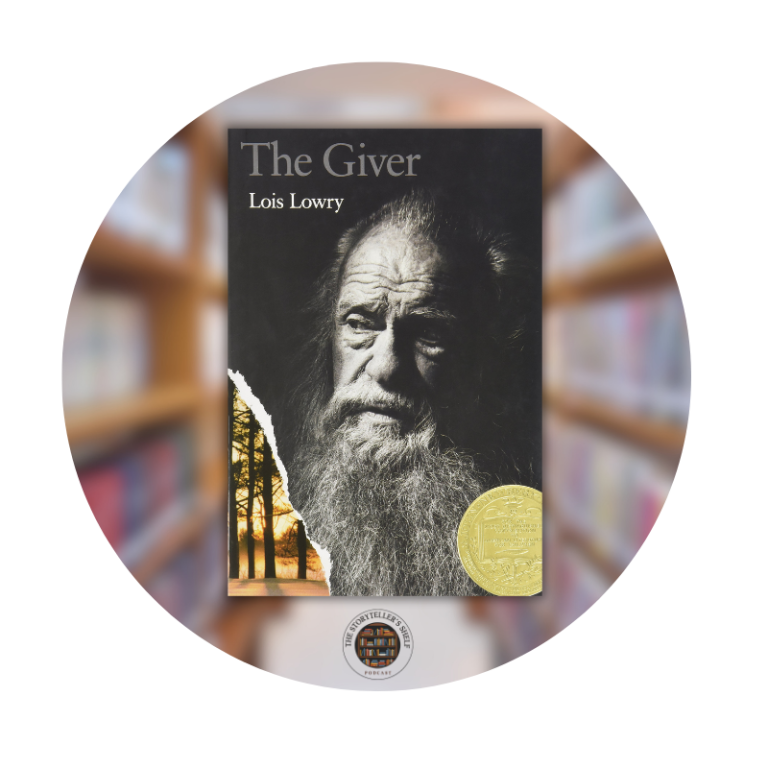
1:01:46 a few minor suggestions, but no, I was not a participant in that. It's a it's a very different thing that I I love language and and screenplays don't care about the language. They just need to make the dialogue happen to move the to move the car chase along. It's frustrating. But I I should add also that I worked when I was working for magazines, I worked as a photographer as well. Uh I had a dark room. the the cover of the giver is a photograph that I did of that old man. The cover of number the stars is a photograph that I did. So I have a very keen visual sense I think and and that's part of film
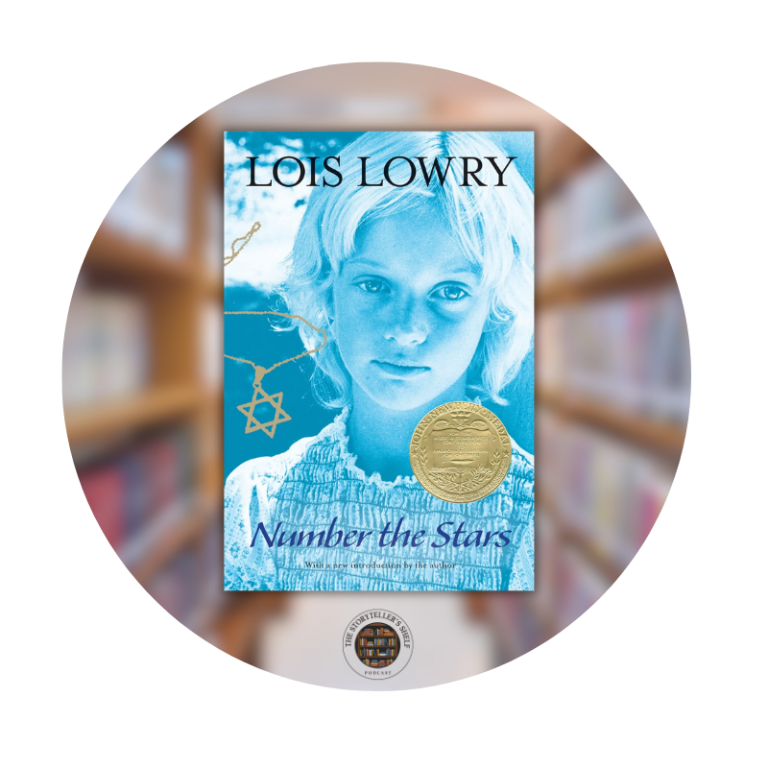
1:02:31 making that interests me as well. So if in another life I could be a cinematographer maybe I that would be my choice. Speaking of Number of Stars, I mean, that's actually something that both of my kids read this last school term, and I noticed that they had redone the cover from when I was in middle school, cuz I remember reading it when I was in middle school. >> If I'm correct, it's the same picture. It used to be red and black, now it's blue. Interestingly, whenever a book is published in another country, translated into another language, they send the author some copies. So I get to see it in all these other other covers and some of them are so bizarre. Some are quite
1:03:11 beautiful but uh it it's fascinating and and you I have no control over that. >> Talking about legacy and looking back you often write about human connection and interdependence. Why does that theme keep returning for you? >> To me there is no other theme. That's a short answer to a lengthy question. And as you know, I've been going on and on with long answers, but uh that's a very that that one only gets a short answer. I can't think of any other important theme. That's what our lives consist of. Who we are to other people, the connections we have, the the mistakes that we make within those, the amends we make uh and and uh how we treat each
1:03:58 other or mistreat. That's that's what life consists of and that's what literature consists of. >> On that note, so beautifully said. Nothing else Teresa and I could say would top that. So, we are going to thank Lois for being here with us and helping us hopefully inspire some more authors in the crowd. And as usual, storytellers, please go to our website, the storytellershelfpodcast.com. If you would like to learn more about Lois, although you probably already know where to find her, but we have created our usual landing page. So, go click on her name and that'll take you to her website. Lois, thank you again. Thank you for being here. If you enjoy this episode, give us a
1:04:44 like, subscribe to our channel, and share this with a friend because we know that other people out there could use this, too. And one last thing, if you like freebies, definitely join us in our email newsletter. Pop your email in, it's for free. We don't spam you, but we occasionally send things like career opportunities, awards and contests, and handy dandy things like pitch guides and query guides that you might find very useful. So otherwise, we will let you go today and we'll see you again next time. This episode of the Storyteller Show podcast is brought to you by Harney and
1:05:29 Suns fine tease. A perfect companion to every story. Whether you're reading, writing, or just enjoying a quiet moment to yourself, Arie and Suns offers a beautiful selection of teas to elevate this experience. From classic blends to unique finds, every cup is crafted with care, just like the stories we love to share. Shophornne.com/disount/stoteller. And Storyteller is an all cap. Now, let's get back to the